Teenage mutant ninja ecological research

aucklandecology's avatarEcology Ngātahi

Posted by Josie Galbraith

Pizza!What does it take to pull off a successful project in the urban jungle? The short answer is courage and people… pizza helps too. Last week I (along with my PhD supervisors) had a paper published in the Proceedings of the National Academy of Sciences (PNAS) – Supplementary feeding restructures urban bird communities. This was a big milestone for me, but also hugely important for getting urban ecological research and the practice of bird feeding into the spotlight. Urban ecology has only relatively recently become a thing – before then it was just a clandestine notion, whispered in dark corridors and laughed at at meetings of ‘real’ ecologists. Now though, the urban environment is a place where real ecological science happens. Bold, brave, big science! It certainly takes a great deal of courage to plunge into the ocean of urban ecological research. It is awash…

View original post 588 more words

We are not afraid

Vincent Hulin, Paris, 14/11/15. Free translation.

Vincent Hulin, Paris, 14/11/15. Free translation.

franckcourchamp's avatarBiodiversity Dynamics

Today, we wondered: why here? Why Paris?
It’s because you, the moron hidden thousands of kilometers away, well concealed while you send empty heads blow themselves up in your place, you know that here, we are everything you hate
.
You know that within a few minutes, all doors will open in Paris for everyone to find refuge
.

You
knowthatfiremen,police officers,soldiers, nursesanddoctorswill rush into saveliveswhileriskingtheir own.

Youknowthat,the next day,everyonewill mass in hospitals to givetheirblood.
Youknowthatthe very evening, candleswill be lit by thethousandsat ourwindows.
Youknowthatwe will continue to welcome the refugees that youabuseinyourown country.
YouknowthatVirginiewill explainas much asshecanthatyouare…

View original post 350 more words

Taken for granted: New Zealand’s looming freshwater crisis

Posted by Cate Macinnis-Ng @LoraxCate

Water, water, every where,

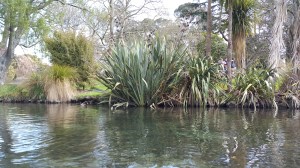
And all the boards did shrink;Riparian vegetation

Water, water, every where,

Nor any drop to drink.

SAMUEL TAYLOR COLERIDGE The Rime of the Ancient Mariner 1798

In his recent contribution to the Infrequently Asked Questions Blog series, the President of The Royal Society of New Zealand Prof Richard Bedford touched on the influence of climate change on migration to New Zealand. He mentioned that the impact of climate change will be more severe in Australia because droughts and heat waves will be more extreme and more widely distributed. While it is true that the projections indicate that climate change impacts will be greater in Australia, New Zealand is ill-prepared for a changing climate and could therefore be equally vulnerable to the impacts of droughts and rising temperatures, even if they are less intense.

As a nation surrounded by water, we take our water resources for granted. Groundwater has been allowed to become contaminated and the quality of our surface freshwaters has continued to decline with excess nutrients causing algal blooms and other problems. Extraction of groundwater for irrigation is intensive in the Canterbury region, particularly during dry periods. Our rivers are dying, our groundwater is dirty and drying up. Prof Bedford points out that droughts will become more frequent and severe in several parts of the country. We already know about the impact this can have on the dairy industry and other agricultural outputs, resulting in economic declines but the impact on native systems is not as clear. We do know that droughts can be a real problem for native fish like mudfish and mast seeding events can be triggered by warmer temperatures, causing population explosions of introduced mammals, leading to declines in native birds. Further details of current knowledge can be found here but in comparison to other countries, the research effort on the ecological and physiological responses of native species to climate change is lacking.

We can’t just assume that because New Zealand has a mild maritime climate, everything will be alright. We need more research on our unique biota and the water culture in New Zealand needs to change urgently before there really is not a drop to drink.

Dr Cate Macinnis-Ng is a Lecturer in Ecology, School of Biological Sciences, University of Auckland.  She is a plant ecophysiologist and ecohydrologist working on plant-climate interactions. In 2016, Cate will be starting a Rutherford Discovery Fellowship exploring the impact of drought on native forest.

The adventures of a roboswan: Using technology to collect ecological data

Posted by Rebecca Lehrke @rmlehrke

Hello there, today I would like to introduce you all to my friend S5, the roboswan.

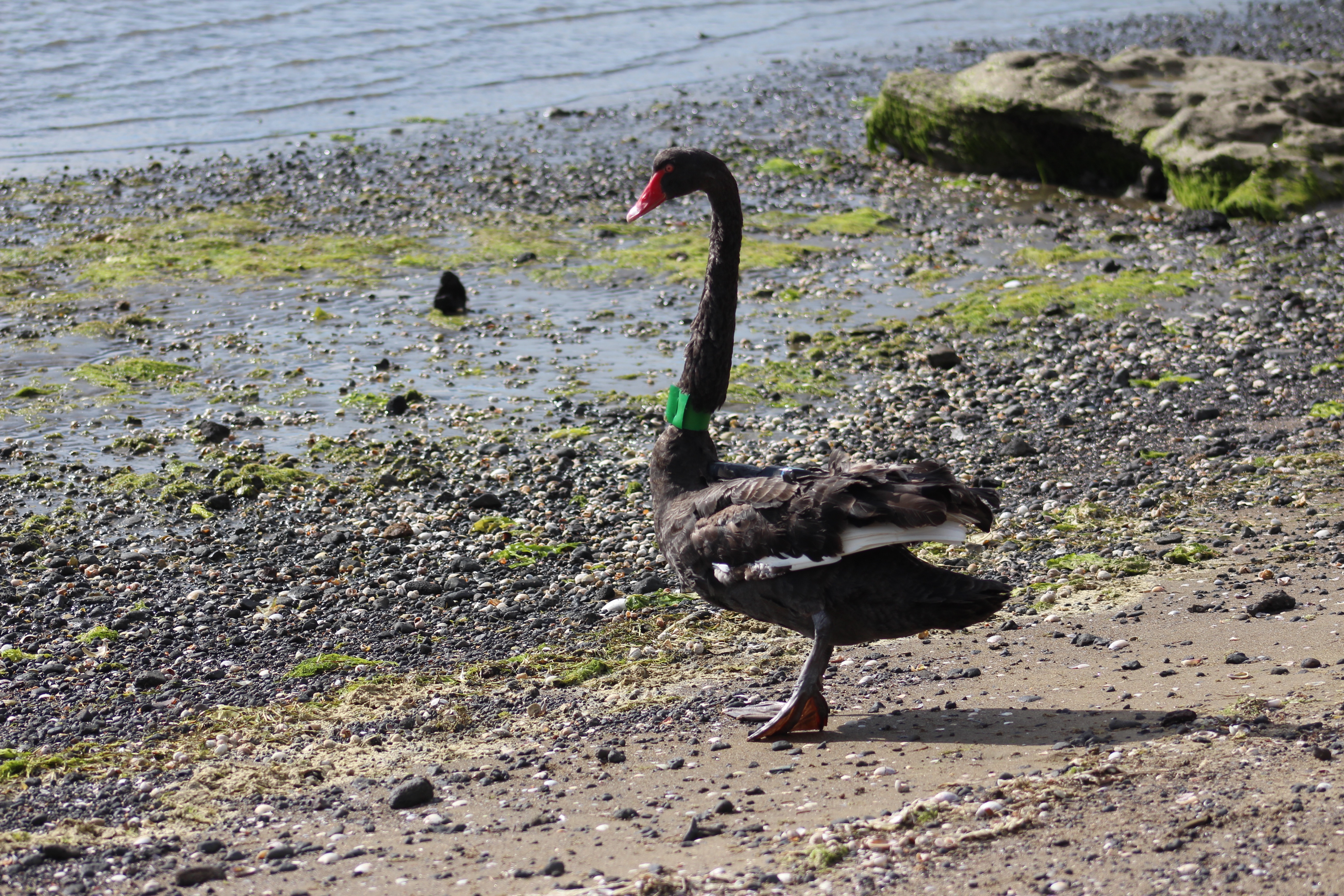
Not S5: but even I’ll admit S5 looks a lot like S7 (shown above) so you get the idea

Not S5: but even I’ll admit S5 looks a lot like S7 (shown above) so you get the idea

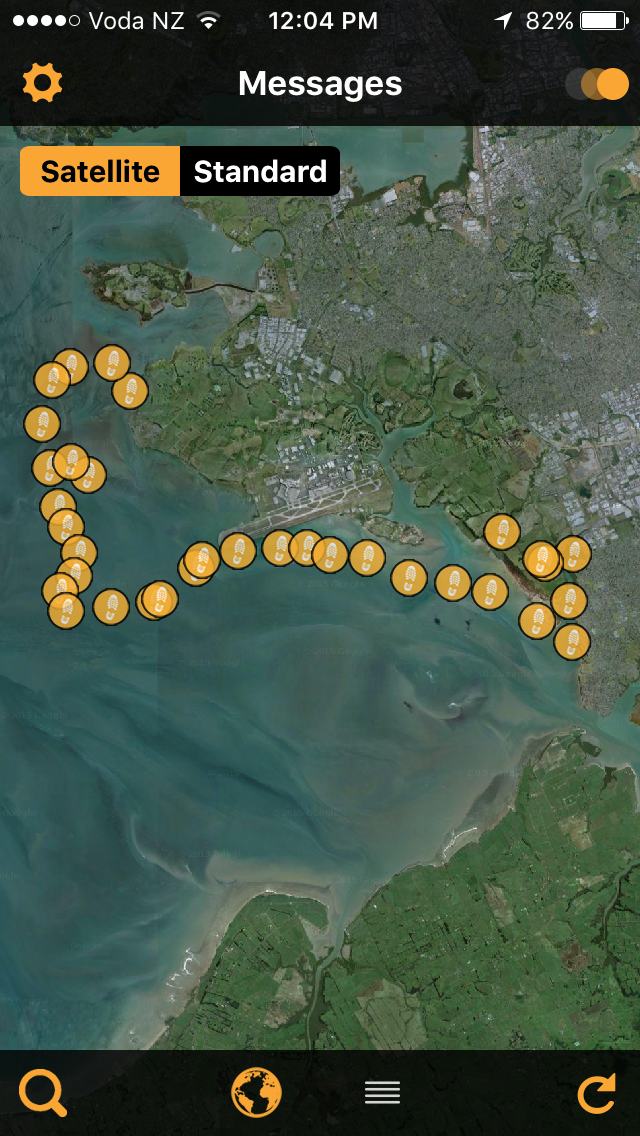
Yes I know that name is not very creative but I’m sure this bird will still peak your interest. S5 is not like other birds of its kind. Unlike other swans in my study, S5 likes to travel, likes an adventure. At the exact moment I am writing this (from the comfort of my home), I am also checking on S5, and yes, this swan is still on its adventure, hanging out in a freshwater inlet near the Manukau end of the Auckland Airport. S5, like all the birds, in my study are special. They all have remote-download GPS tracking devices attached to them. This means I can see where they are every five minutes.

The adventures of S5 - the live feed of GPS locations for S5 in the Manukau Harbour shown through an app on my phone

The adventures of S5 – the live feed of GPS locations for S5 in the Manukau Harbour shown through an app on my phone

It’s not often that as an ecologist you can check in on where your study animals are from an app on your phone while you write a blog post in your lounge. As I have explained in a previous blog post my research involves using tracking devices to look at how the movement and location of black swans changes in response to management at the Auckland airport.

I have had the opportunity to work with some pretty amazing, and cutting edge technology for this study. We are using remote-download GPS tracking devices, which allow me to get a continuous stream of movement data on a number of swans around the airport. It is certainly fascinating and insightful already and we have only just started getting data.

Of course with great power comes great responsibility, so they say. Now that I have my data coming in, I have to start analysing it, and there’s a lot of data to work with! But at least I can check in on S5 each night and imagine what adventures its had while moving around the harbour.

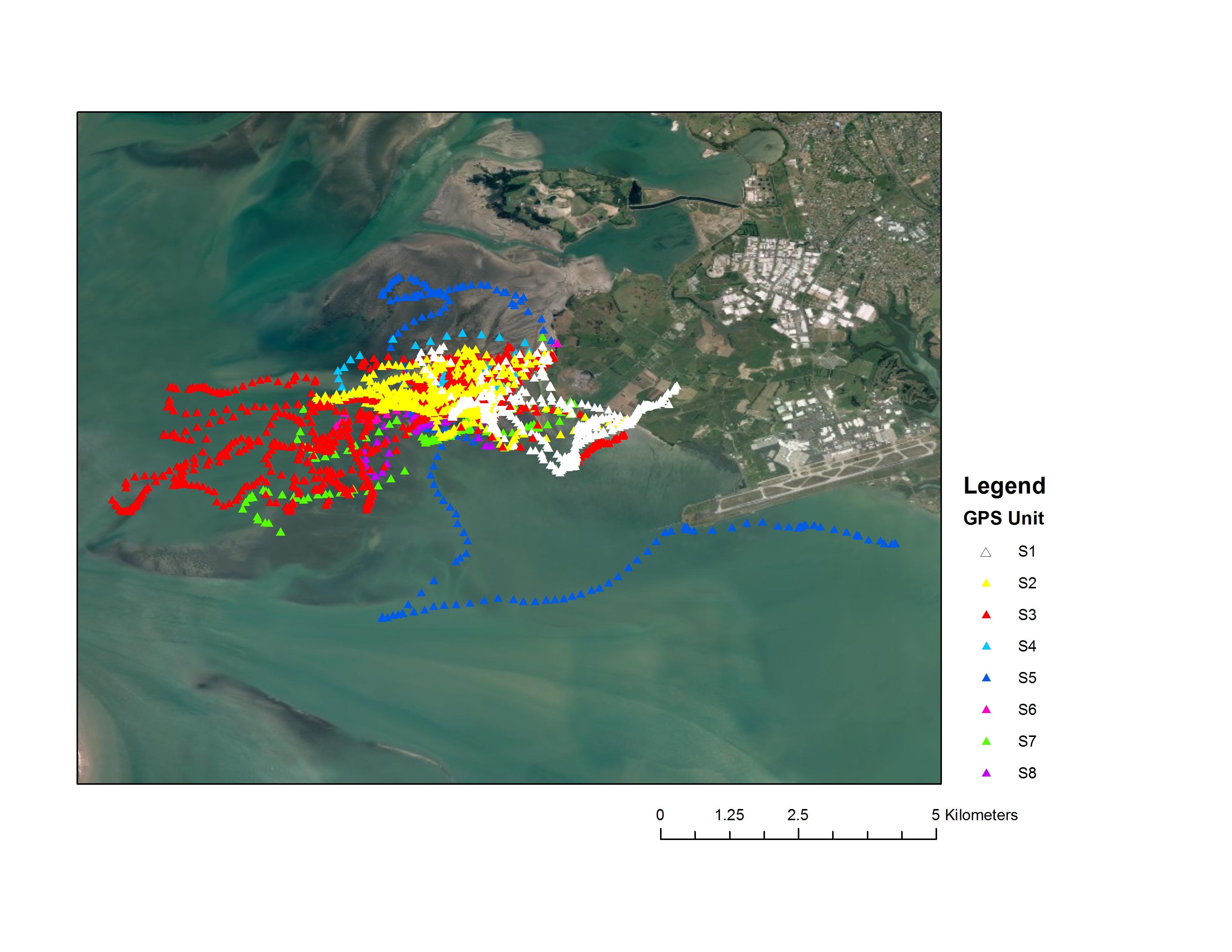
A lot of data - raw GPS locations from less than a week for my eight study birds in the Manukau Harbour

A lot of data – raw GPS locations from less than a week for my eight study birds in the Manukau Harbour

RebeccaRebecca Lehrke is an MSc student in the Centre for Biodiversity & Biosecurity, School of Biological Sciences, University of Auckland. She is using movement ecology to assess the efficacy of disturbance-based management of black swans at the Auckland Airport. She is supervised by Todd Dennis and Margaret Stanley.

A middle finger to standardisation

Posted by Jamie Stavert @jamiestavert

I utterly loathed the final years of school. This wasn’t because of any social ineptness – I made lots of wonderful friends, many of whom I’m still close with today. Secondary school gradually dissolved my intrinsic creativity. The learning experience (or lack thereof) was frustrating and painfully mind-numbing. Learning became focused on the regurgitation of material for seemingly endless assessment. The extent of my creative experience was conjuring up evil and outlandish pranks to torment humdrum geography teachers. In stark contrast, primary school provided a perpetual banquet of creative opportunities. There was art, music and writing, and the freedom to ask absurd questions about the world. Since starting a PhD I feel as if I’ve returned to childhood – rediscovering my creative freedom in an endeavour to answer intriguing questions. But unfortunately most people don’t get this opportunity.

So why does creative and enquiry based learning suddenly disappear from the education system? Why does the learning environment suddenly change from warm and nurturing to cold, competitive and assessment focused? Is this why the intrinsic compulsion to learn, that all humans have, disappears in so many people?

Children are curious and have strong sense of wonder about the world

Children are curious and have strong sense of wonder about the world

I think Sir Ken Robinson has the answer. Sir Ken’s recent book Creative Schools (you should all read it and watch his Ted Talk!) draws some fascinating parallels between industrialisation, modern agriculture and the education system. I found this analogy particularly captivating given my learning experiences at school and my research interests around the impacts of agricultural intensification on ecosystems.

So the story goes: industrialisation facilitated the intensification of agriculture, which dramatically increased food yields, fueling growth of the human population. However, this has had massive implications for natural ecosystems, resulting in widespread biodiversity loss and decline of critical ecological functions and services (e.g. Cardinale et al., 2012). Key industrial principles are conformity and compliance. In industrial systems, processes are linear and production is driven by market demand. The ultimate objective is to produce large quantities of identical versions of the same product. Like industrialised agriculture, modern education is constructed around these industrial principles and focuses on output and yield. This is despite the fact that, like ecosystems, human intelligence is profoundly diverse and dynamic. By its very nature the industrial model rejects diversity and creative freedom.

Industrialisation has driven the expansion and intensification of agriculture

Industrialisation has driven the expansion and intensification of agriculture

Simple ecological concepts span both biological and education systems. The loss of diversity reduces productivity and resilience (e.g. Naeem & Li, 1997). Agricultural and educational industrialisation has benefited a select few people/species with particular traits, that allow them to thrive under such conditions. But this is at the expense of diversity. If we continue down this path, we lose adaptability and resilience to societal and environmental perturbations.

In a rapidly changing world, where demand on natural and human resources is increasing faster than ever, it is critical that we promote and cultivate diversity and creativity. As Sir Ken puts it “education is only really improved when we understand it is a living system too”. Perhaps the only way to combat the daunting environmental challenges caused by industrialisation is to reject the industrial model itself, at least in our education system.

IMG_0293Jamie Stavert is a PhD candidate in the Centre for Biodiversity & Biosecurity, School of Biological Sciences, University of Auckland. He is investigating how functional traits drive the biodiversity-ecosystem function relationship and response to environmental change in pollination systems. He is supervised by Jacqueline Beggs, Anne Gaskett, David Pattemore and Nacho Bartomeus.

Bush mad in the city

Posted by Samantha Lincoln @slin247

Over the course of this year I have been undertaking intense field work across some of Auckland Councils public parks. Urban ecology is inherently strange; emerging sweat-soaked from a long day’s work, and carrying a small colony of beetles in your hair onto a main road whilst startling local dog walkers and being serenaded by Auckland Zoo’s primates. While not as idyllic as disappearing to the mountains for a week, urban ecology is incredibly important when most of our human population is urban. Connecting with nature is undeniably important for our wellbeing.

Auckland has hundreds of public parks of all sizes, both without and without maintained walking tracks as I have discovered. They are refuges for native species in the middle of our manicured city, but how well do we really look after these spaces? During my field work my volunteers and I have found a range of debris: backyard clippings spreading weeds, Victorian inkwells, a year’s supply of newspapers courtesy of a lazy paperboy, shelters built by those with nowhere else to turn (a growing issue in Auckland) and a pile of books featuring a bunny not often seen during pest control.

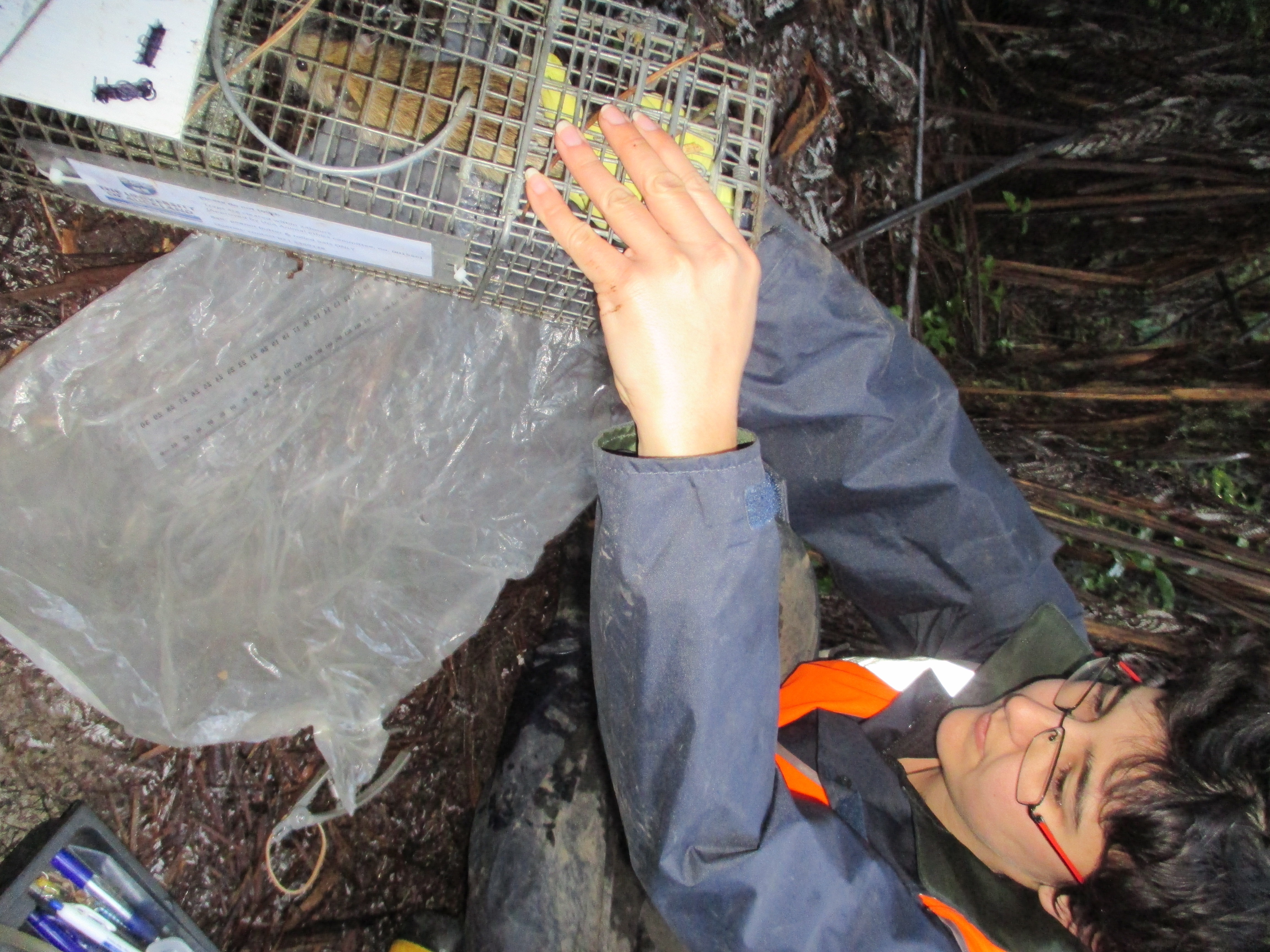
Live capture of a rat during a capture-recapture study

Live capture of a rat during a capture-recapture study

As Auckland city grows, more pressure is being placed on these biodiversity refuges and how we value and care for them becomes more important as was noted last month. Will we value and nurture these green spaces, or will they fail under the pressure? Will we continue to use them as personal rubbish dumps, or will we take interest in the other species that use these spaces? I will be a science advocate – we can all lend our voices. To me nothing beats the feeling of following a fantail nest from first cheeps to first awkward flight, as I make my daily visit to the rat trap at the tree’s base.

Sam Ln webSam Lincoln is an MSc student in the Centre for Biodiversity & Biosecurity, School of Biological Sciences, University of  Auckland. She is trying to disentangle interactions between domestic cats and rats in urban environments. She is supervised by Margaret Stanley, John Innes and Al Glen.

Anna went to Ant Course

Not a bad place to be conducting field work (Chiricahua Mountains, Arizona)

Not a bad place to be conducting field work (Chiricahua Mountains, Arizona)

This August, whilst those back in Auckland endured the worst of winter, I popped over to Portal, Arizona, to participate in the one and only Ant Course. The 10 day course, run by Dr Brian Fisher from the California Academy of Sciences, is a workshop designed for those researching various aspects of ant biology. Run at the Southwestern Research Station in the Chiricahua Mountains, the area boasts the richest ant fauna in North America. Although Ant Course focuses on the evolution, classification and identification of ant genera, a broad range of ant biology was taught, meaning I came back home with a new myrmecologist skill-set.

Digging for honeypot ants

Digging for honeypot ants

One of the first tasks we were given was to dissect an ant, which is, well, about just as difficult as dissecting an ant sounds. Fortunately microscope work was broken up with collecting trips in the field which also demonstrated various sampling methods as well as a seminar series covering topics from systematics to ant behaviour and invasive ant research. As such, we covered many different aspects of ant research and were introduced to some amazing people conducting exciting research in the ant world. Some of the attending students even worked together under the guidance of Dr Adrian Smith to create videos on various research areas of ant biology, which you can view here.

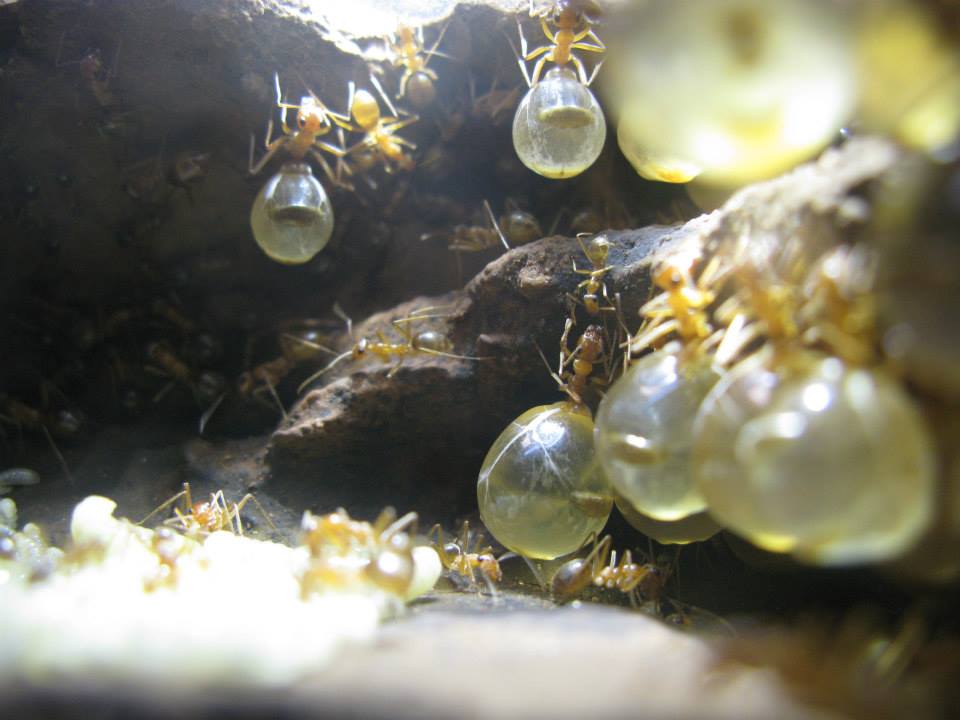
Honeypot ants

Honeypot ants

Cowboys by sunset at the local rodeo

Cowboys by sunset at the local rodeo

Vinegaroon!

Vinegaroon!

Although the work at Ant Course was hardly tiresome (I do wish every day was Ant Course), we had time to relax in the pool and were even fortunate enough one night to visit a local rodeo and meet up with some real-life cowboys. And ants aside, the area is host to a diverse range of animals (native mammals!, snakes and other neat reptiles, birds the size of moths, bats all over the place), which I took great delight in spotting. Perhaps my favourite activity was turning over rocks at night looking for vinegaroons.

I’m back in Auckland now and waiting for the weather to buck up a bit, so I can putwhat I learnt to practise with my upcoming field season!

Oh, and I’m now signing off as Anna the Antbassador. Cheerio!


Anna Probert is a PhD student in the Centre for Biodiversity & Biosecurity, School of Biological Sciences, University of Auckland. She is using ants as a model to assess the risk posed by exotic invertebrates to native ecosystems. She is supervised by Margaret Stanley, Jacqueline Beggs, and Darren Ward.

Ode to R

Posted by Jessica Devitt

No face

R, many a poem I have written

About our tumultuous relationship-swaying from completely smitten, to recoiling, as though I had been bitten,

Your powers of statistical analysis have had me speechless and in awe, but then you misunderstand me and now I am angry and raw,

One day we click, the next I have lost my wick thinking you are a complete…well you get the picture.

The above poem is a more measured example of my current love/hate relationship with the statistical software programme called R.

R began its development in the early 1990’s right here at the University of Auckland.  This programme is incredibly powerful, with the ability to compute huge datasets, administer an astonishing range of analyses and it is free!  The community surrounding R continue to develop new packages that you can easily install for basically any type of data analysis, manipulation and mining that you could imagine.  And this is fantastic!

Desk flip

However, with a heavy head I have to now insert the ominous ‘BUT”.  For a layperson like myself, with mediocre statistical understanding it can be a daunting undertaking to feed in your painstakingly gathered data, ascertain what statistical analysis to do and then make that happen in R.  Further, the all-important, “do you want graphs with that?” is a whole other story.

R is run using programming language, specifically text-based ‘S’ language, thus you need to write exactly what you want it to do in the language that it ‘understands’, and like learning any new language, this is a relatively slow process, especially when some of the language terms seem counter-intuitive.

This is not a story of failure however, this is a story of redemption, as I had never used the program before and now I can.  For someone that was not ‘bright enough’ to sit School Certificate maths (now NCEA Level 1), who cried at my math tutor’s house once a week and vehemently declared that “I will never be good at maths”!  I can now run a range of tests, understand (mostly) the output and have a fair idea of what to do when the dreaded red error writing is returned.  I have achieved this through the help of my peers, excellent sites such as Stackoverflow, Statmethods and a range of journal articles, books and just good old Google.

Happy computer

The moral of the story here is: don’t be scared off by R, it is worth the initial, and at times reoccurring frustration, and if I can do it anyone can.

Helpful Information

Rlogo R Software: https://www.r-project.org/

UNi logoUniversity of Auckland: https://www.stat.auckland.ac.nz/en/about/our-research/software-development/sw-the-r-project.html

Books

Logan, Murray.  Biostatistical design and analysis using R: a practical guide. John Wiley & Sons, 2011

 De Vries, A., & Meys, J. (2012). R for dummies. John Wiley & Sons.

Jessica jessDevitt is a MSc student at the Centre for Biodiversity & Biosecurity, School of Biological Sciences, University of Auckland. She is researching the potential host-range of the hadda beetle in Auckland to assess how it might impact on native ecology. She is supervised by Margaret Stanley

From North to South

Posted by Carolina Lara

I arrived in Auckland on the 25th of October 2014 on a beautiful, sunny spring day carrying 53 kg luggage, after a total travel time of 30 hours.  My first real experience of the kiwi culture was seeing someone barefoot at the airport, “that is weird” – I thought, but eventually found out it is something quite common. What it is also common is rain. It rains a lot. A LOT. You cannot of course trust the weather forecast and you do need to have a raincoat with you and an umbrella, just in case (this I would say has been the best  advice I received before coming here). The duration of the PhD programme is three years, but I was advised to consider it to be four years which will make it the longest period being away from home, despite the fact this is not my first time living abroad. But it always feels like the first time.

I am part of the cohort of approximate 30,000 Mexican students doing a postgraduate programme abroad, the United States being the preferred destination, followed by Spain and other European countries. Of those, it has been estimated that 5-7% of students never return to live in Mexico. The number of international students coming to New Zealand has increased in the past few years, for example, PhD student numbers have increased from 1,665 in 2008 to 3,838 in 2014.  The main sources of NZ international students are China and India, with South Korea occupying the third place.

Discovering New Zealand

Discovering New Zealand

So far my experience living in NZ has been quite good. I will not lie, being away from my family, friends and dogs might be something I could never get used to. And although I have made good friends here, the dogs… It is not all bad here though! I am lucky enough to be part of an amazing lab group and research team and of course and I have learnt many new things and done other things for the first time. From funding applications that would take me a week to get ready – including hundreds of corrections from my supervisor, presenting my research in front of a big audience (and not being able to understand one of the questions because of the language barrier), be immersed in the urban ecology field along with all the new bird and plant species that I am still learning and getting to know, dealing with Mexican and Kiwi bureaucracy (at the same time) and last but not least, acknowledging that everything takes quite a bit time to be resolved in New Zealand, but usually with a satisfactory outcome.

Getting to know New Zealand birds

Getting to know New Zealand birds

This has been a great year out of three still to go and my first field season is waiting for me! That and the many adventures and experiences yet to come.

Carolina2Carolina Lara M. is a PhD Candidate within the Centre for Biodiversity and Biosecurity, School of Biological Sciences, University of Auckland. Her research interests focus on seed dispersal networks within fragmented landscapes. She is supervised by Margaret Stanley, Jason Tylianakis, Karine David, and Anna Santure.

A little ode to field work

Posted by Julia Kaplick @julekap

Julia takes aim!Spring is on our doorstep here in Auckland and nature is visibly getting busy. It is the start of the growing season for many plants and the most active time of the year for many animals. For many ecologists it also means that field work season is starting.

I am lucky enough to do my research in a more applied area of ecology. I get to go out into the forest and collect the data that forms the basis of my research myself. It is in fact the part that I enjoy the most and the main reason why I chose to work in ecology. During more than a year of field work in New Zealand, I have been soaking wet, freezing cold and muddy from head to toe, but at the end of the day I went home happy and with pages full of data. I have been hanging 15 metres high in the kauri forest canopy and freezing my feet off while taking predawn measurements in the mangroves.

The view from above.

The view from above.

Field work is challenging and fun. It teaches you to plan and organise, to improvise and to find creative solutions, as things do not always go as originally planned. Who knew that the party supply store around the corner would turn into one of the best sources for field equipment? What else could you possibly do with these metre long party straws than put wood samples into them and there cannot be any other proper use for Styrofoam cups than to use them as a radiation cover for temperature sensors. I also learned that a pressure bomb is a good thing and have significantly increased my electrical skills by building and connecting sensors. You also know that you are working with pretty cool instruments when your supervisor seems to be more worried about the machine dropping out of than canopy than about the PhD student who holds it. All this I have to admit came at a price. I probably lost several litres of blood to mosquitos and a scar on my middle finger will always remind me that soldering irons are extremely hot, not that I really needed that reminder.

Mud pie anyone?

Mud pie anyone?

Field work lets you see the world with different sometimes slightly nerdy eyes. It is exciting and rewarding to see theory come to life, even if it is sometimes unexpected. Someone recently told me that field work can become a little addictive and I can already see why.