The ants are coming

Posted by Darren Ward @nzhymenoptera

Ants are among the most invasive animals on the planet. Over 240 species have been recorded as being transported by humans to new geographic locations, and 19 of those are considered invasive.

L humile -antweb

Caption. The Argentine ant, a globally invasive species. Photo by Philip Herbst. Image available from Ant Web.

But not all invasions occur as the result of direct transport. Some species have managed to invade one place, survive, and then migrate to another—a process known as the “bridgehead effect”. In a new paper, just published in Proceedings of the National Academy of Sciences, we investigated these secondary invasions, and show bridgehead effects are a major driver of new invasions.

We looked at interception data, that is, records of what ant species have been intercepted at the border. Two large and long-term datasets were examined, one from the USA covering the years 1914 to 1984 and containing 51 ant species, and the second from New Zealand covering the years 1955 to 2013 with 45 ant species.

The most surprising result was that most of the interceptions did not originate from species’ native ranges but instead came from already invaded areas. In the United States, 75.7% of the interceptions came from a country where the intercepted ant species had been previously introduced. In New Zealand, this value was even higher, at 87.8%.

Interceptions also increased when they came from countries that were physically closer (Latin America for species intercepted in the United States and Oceania for species intercepted in New Zealand). Additionally, ant species that travelled the most tended to be more successful in invading a secondary location. This created a positive feedback loop between the introduction and establishment stages of the invasion process, in which initial establishments promote secondary introductions.

Overall, these results reveal that secondary introductions act as a critical driver of increasing global rates of invasions. Consequently, it is not enough simply to account for the original location of an invasive species. To better understand pathways of invasive species, we also need to follow the dynamics of spread throughout their entire range.


Cleo Bertelsmeier, Sébastien Ollier, Andrew M. Liebhold, Eckehard G. Brockerhoff, Darren Ward, and Laurent Keller. Recurrent bridgehead effects accelerate global alien ant spread. PNAS (2018). www.pnas.org/cgi/doi/10.1073/pnas.1801990115


and if you really like ants, then another really great related paper is

Cleo Bertelsmeier, Sébastien Ollier, Andrew Liebhold & Laurent Keller. Recent human history governs global ant invasion dynamics. Nature Ecology & Evolution (2017). doi:10.1038/s41559-017-0184


Darren Ward is an entomologist, Head Curator at the New Zealand Arthropod Collection at Landcare Research, and a senior lecturer at the School of Biological Sciences, University of Auckland.

Social Wasp Invasion on New Zealand’s Offshore Islands

     Watch my vlog on social wasp invasion on New Zealand’s offshore islands
– some of the last refuges for endangered species – below:


Julia Schmack is a PhD student at the Centre for Biodiversity & Biosecurity, School of Biological Scinyences, University of Auckland. She is researching the ecology and control of social wasps, supervised by Jacqueline Beggs, Darren Ward and Mandy Barron (Landcare Research). Her PhD is funded by the Biological Heritage National Science Challenge. Download the Highlights 2017 report by the Biological Heritage National Science Challenge here.

twitter_pixabay.com @julia_schmack

email_commons.wikipedia.org j.schmack@auckland.ac.nz


The other side of the world

Posted by Noor Rooding @noorrooding 

I left the Netherlands as winter was finally coming to an end.  Arriving in Auckland I have been able to experience the final glimpse of summer, before it heads into the depths of winter.  Coming from the Netherlands I thought I understood rain… Sadly, Auckland has taught me that there is more to rain than I had realised.

In the Netherlands I study Applied Biology at the HAS University of Applied Science in Venlo. This is a four-year bachelor’s programme and I am currently in my third year. This year I had the opportunity to go on an internship abroad. I contacted Cate Macinnis-Ng and she was happy to get some help with some ongoing projects. This is how I ended up on the other side of the world

I have done some traveling in the past but only in Europe, so going to the other side of the world was a big step. I have been in New Zealand for two months now.  One of the first things that I noticed is the average size of the New Zealander is a little bit smaller than in the Netherlands. But after all Dutch people are just tall, so it shouldn’t be a surprise. Of course, there are more obvious differences like the time difference, climate and nature. One of the major differences that has struck me is how much native bush I see, even when I am in the middle of the city.

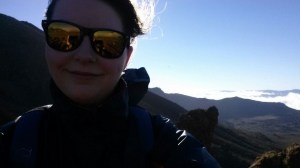
I have also enjoyed seeing other parts of New Zealand.  The Netherlands is very flat and does not have amazing things like volcanoes. I had a great experience doing the Tongariro alpine crossing and met some awesome people there. Everyone is so friendly and willing to help you. Someone even took me on a road trip the day after the walk.

As well as having lots of fun checking out your beautiful country I have also been doing some work.  I am working on the litterfall project, which is an ongoing project involving many people. For this I am collecting litterfall material and sorting them into different categories such as species, branches and reproductive material. My main focus is looking at the reproductive cycle of the kauri.  This involves looking at the data to date and seeing if drought has any effect on the reproductive cycle.  I am expecting to see that drought conditions lead to more loss of reproductive material, such as seeds.

Coming to New Zealand has been an amazing experience that I will never forget.  One of my favourite parts of my internship has been getting involved in several other projects. I was lucky to be help with the 24-hour project climbing kauri trees. It gave me the chance to climb these amazing trees and see them up close and personal.

noortrees

Climbing the trees for the 24-hour project

I am here to learn and enjoy my stay in the country and experience as much as possible. If anyone needs help with anything, please feel free to contact me.

noor

Noor is an intern visiting from The Netherlands, working with Cate Macinnis-Ng on ‘The Litterfall Project’.  Contact details: noorrooding@hotmail.com


Teaching the teachers

Posted by Helen Armstrong

During my career as a primary school teacher I have helped many students plant in excess of a thousand native trees and shrubs in and around our school. And never in that time have I ever wondered about tree physiology-until now.

At present I am part of a group of teachers participating in a Science Teaching Leadership Programme [STLP] administered by the Royal Society Te Apārangi. The programme has two specific phases. The first phase involves teachers taking paid leave from their school for two terms to engage in a programme of learning that involves them working in a host organisation for approximately 15 weeks, alongside scientific staff, to get an appreciation of the Nature of Science. The Nature of Science is the over-arching theme of the New Zealand Curriculum which all schools teach science through. The second phase of the programme involves the teacher working alongside school management and their teaching colleagues to improve the quality of science learning across the school or science department.

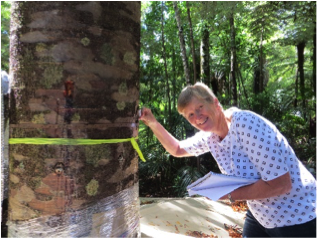
I am being hosted by Dr Cate Macinnis-Ng and the School of Biological Sciences. She and her team of PhD and Masters students are working on projects which are looking at how environmental changes, such as drought, affects kauri and other native trees such as tanekaha.

Helen

I am enjoying discovering how and when a tree uses such things as sugar, water and carbon and how these are transported around a tree. Before being part of this research I thought I had a fairly good grasp on how a tree or plant breaths. Turns out there is so much more I didn’t know, but thanks to Cate and her team who have given me the opportunity to be involved in their research, I am learning so much more than I could ever learn by reading articles or watching YouTube clips.

Being part of an ongoing research project has really opened my eyes as to what scientific research involves. In the media you see and read about all the amazing work and breakthroughs scientists have made all around the world. But what you don’t see is the hours of work, determination and set- backs that go into discovering something new- be it a cure for the common cold or how trees react under changing conditions.

I am excited to use what I have learned in my placement back at my school and channel the natural curiosity of our students into as many different curriculum areas as possible, enabling them to have a deeper understanding of science. Some of the projects I have been involved in whilst on my placement can be modified to be used in a classroom so the children will be even more able to benefit from the experience I have had.

I am willing, able and very keen to learn as much as I can whilst on my placement which will end in late June 2018, so if you need an extra pair of hands for fieldwork, experiments, presentations or are involved in anything that you think I might find interesting, please feel free to contact me.

helena@easttamaki.school.nz

A great day (and night) of tree-climbing

Posted by Ben Cranston

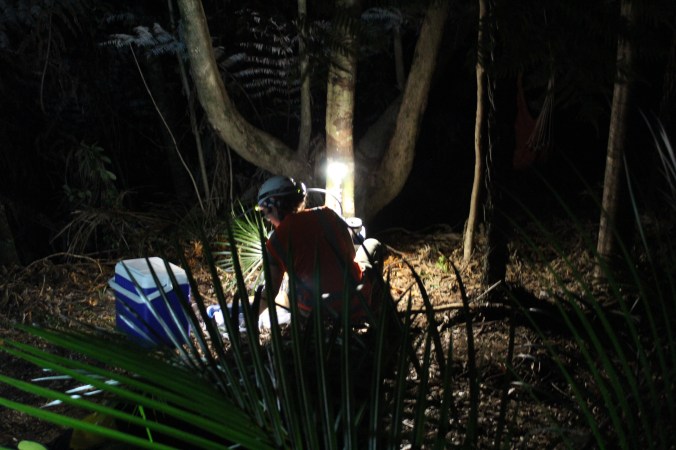
On the morning of 20 March 2018, a crew of University of Auckland researchers, professional arborists, and volunteers set out for Huapai Scientific Reserve in the northern Waitākere range with a few objectives in mind: most notably, to collect 24-hr transpiration and leaf water potential values for kauri (Agathis australis). We were equipped for an overnight stay in the forest and spirits were high. Climbing, gear-and-sample running, eating, and sleeping shifts were divided up between participants and the plan was laid out…IMG_1822

The first day was mostly meant to familiarize new climbers with the protocol as well as replace some older, ailing equipment in the canopy. In effect, we ended up using day 1 to ease into an appropriate mindset for the overnight campaign which was to begin early on the second day. In addition, we were able to snag a bit of press and drone footage of the science going on at Huapai which was very cool!

IMG_1840

I also was able to obtain a great vantage point of the throughfall exclusion shelters which were recently installed at the site. In this frame, it is slightly discernible that soil under the tarps is staying dry relative to outside. Preliminary results from sapflow measurements are showing no clear distinction between droughted and non-droughted trees, but that should hopefully change over the course of the year(s) owing to these tarps.. stay tuned.

IMG_1857

Our resident arborist, Freddie Hjelm, had his enthusiasm for New Zealand forests on full display throughout the whole trip. On behalf of everyone in the Macinnis-Ng lab, I offer our sincerest appreciation to him and the rest of The Living Tree Company crew for helping us stay safe and problem-solve when the going got tough!

IMG_1893

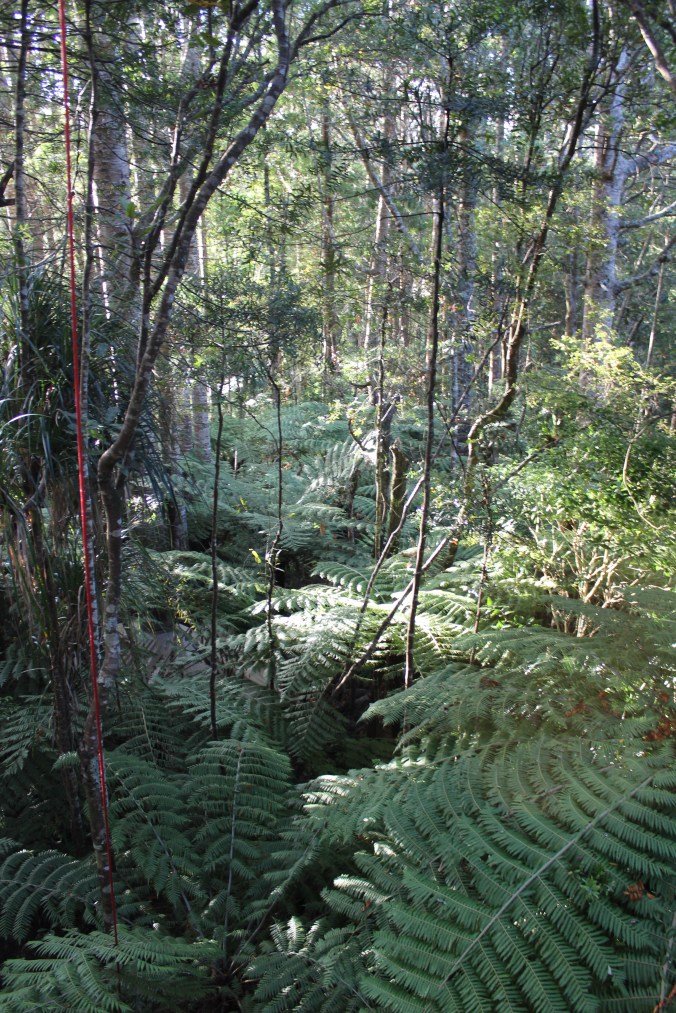
Apart from a trove of data (currently being processed), over the course of the collection period we were all treated to views like these. Climbing up the stems of my study trees  revealed a cathedral among the canopy not to soon be forgotten.

IMG_1900

It was a lot of work from a lot of people but we made it to the next day. The volunteers did an amazing job hanging in there well into the night and I can only hope that the experience was worth the toil.


Ben Cranston is a PhD student at The University of Auckland. His project is part of the Kauri Drought Experiment under the supervision of Cate Macinnis-Ng.


Utilising Isolation to Assist with Island Eradication Prioritisation

By Zach Carter

Isolation and area are important quantities in island biogeography because they help estimate species richness on isolated natural communities. Geographically small and isolated communities are often hotspots of considerable endemism because immigration  occurs at a low frequency, thereby allowing time for cladogenesis to occur. I have recently been interested in quantifying isolation because its application could extend beyond that of determining how species came in to being. Just as immigration is thought to be less extensive on islands that are isolated, so too should be the immigration of terrestrial mammalian pests. I have theorised that highly isolated islands hosting invasive pests are, therefore, good candidates for cost-effective eradication programmes.

While area is a concrete measure of geographic size, isolation has taken on a contrived definition since its scientific inception. In order to define this term, I compiled many of the most popular metrics describing isolation and reduced them using Principal Components Analysis (PCA). In doing so I could parsimoniously extract the most important information and graph isolation visually to better understand its inter-workings. The metrics I am using include: the shortest distance to the New Zealand mainland, the longest over-water distance from the mainland, the proportion of land surrounding each island within a target organisms maximum swimming distance (1km, 3km, and 5km, known as landscape-scale isolation), the summed distance to the nearest four life supporting islands (any landmass greater than 5ha in size), The path from the mainland that requires the least amount of energy expenditure (known as a least-cost path), and the amount of land covered with the least-cost path.  An example of one metric, the least cost path, is provided below with a Grey Group Island off the coast of Great Barrier Island.

GreyGroupLeastCostDist

I conducted this analysis on (almost) every offshore New Zealand island at least one hectare in size. While very early in the analysis, the PCA determined that three components are necessary to describe isolation. A preliminary output featuring two principal components is provided below.

BiPlotIsolation

As can be seen via the red circle, islands that have already been eradicated of invasive mammal pests tend to cluster largely in the 3rd quantile. If the 3rd principal component is plotted, the clustering in a 3-dimensional space is even more apparent (though difficult to see with a photo). This indicates to me that many of the islands already free of invasive mammals exhibit many similarities from an isolation standpoint. With this mentality, islands within the red circle that have not been eradicated may be good option in the near future. This research is preliminary, though, and will require more analysis!


Cat Management: There is nothing to fear but fear itself

Posted by Margaret Stanley @mc_stanley1

Cats are a continual cause of controversy in New Zealand, and Auckland is no different. We know cats kill wildlife, but also that people value the companionship of pet cats. The current controversy in Auckland concerns the proposed Regional Pest Management Plan (RPMP), which includes cats.

The current Regional Pest Management Strategy (which has been operating since 2007) includes feral cat management, but the main issue for biodiversity and biosecurity managers is the lack of a clear demarcation of what is a ‘pest cat’ and what is someone’s ‘pet cat’. What happens when they get a cat in a live trap in a significant ecological area? Is it someone’s pet or a stray or feral cat? Any cat caught in a live trap no doubt acts pretty feral out of fear, so it’s important to get the definition right. The proposed Regional Pest Management Plan puts forward a logical way of doing this, that not only keeps wildlife safe, but should also improve the safety of pet cats.

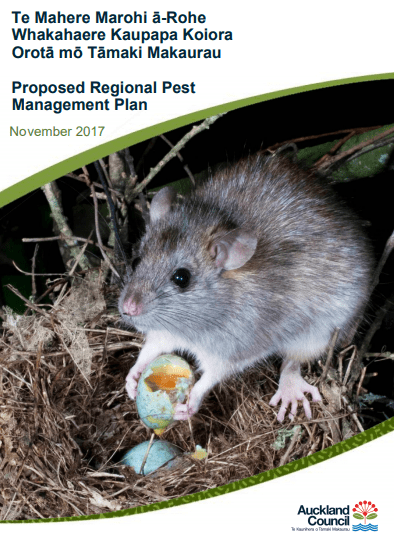
rpmp

Proposed Regional Pest Management Plan 2018 – Have your say by 8pm Wednesday 28th March 2018

What does the Council want to do to cats?

The RPMP  proposes to continue managing cats in areas of high biodiversity value (e.g. Whatipu) along with rats, stoats and other predators. However, under the proposed plan, cats will be defined as pests if they are not able to be identified as being owned via microchip and accompanying registration on the NZ Companion Animal register. So, if your cat is found within one of these conservation areas – and it’s microchipped and registered – it will be identified as owned and returned to the owner. If you are worried about the unlikely event of the microchip failing, then you can rest easy. A detailed communication plan would be put in place for any new high biodiversity sites where cats are intended to be managed as part of predator control. The communication (e.g. mailbox drops) will ensure owners are aware of the risks of having unidentifiable cats in these areas, and can keep their cats indoors while the control is underway if they are concerned about microchips failing.

Other cat management that the Council is formalising in their proposed RPMP is that:

  • feeding of cats is prohibited on parkland containing Significant Ecological Areas;
  • Cat owners to prevent cats from entering sites managed as threatened species refuges, indicatively including open sanctuaries (Tawharanui, Shakespear), kokako/kiwi management area in the Hunua Ranges, and Ark in the Park.
  • Cats being moved to or among islands must be micro-chipped and registered on the NZ Companion Animal register, and no cats to be brought within 200m of cat-free islands.

Better outcomes for pet cats

So no one is targeting your pet cat, or trying to kill it. In fact, by microchipping your cat and keeping it indoors you are improving the health outcomes for your cat. Currently, few Aucklanders keep their cats indoors. But indoor cats can’t get run over, injured by strays, and are less likely to pick up diseases. The fear of this proposed RPMP for cats is misplaced.

Better outcomes for wildlife

cats

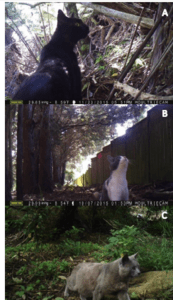
Just some of the many cats seen on camera traps in Auckland urban bush reserves. (Lincoln 2016).

We know feral cats have been responsible for the extinction of birds in NZ (and globally), but what about urban cats? Our research using camera traps in Auckland urban bush patches showed ~53 individual cats (conservatively identified by pelt patterns) detected at 8 sites over 5 nights. These numbers are conservative (our cameras wouldn’t detect all cats) and astounding. Plenty of pet cats are wondering around Auckland’s parks and significant ecological areas. This is not unusual: plenty of research has shown that cats wander from suburban homes, frequently use local bush areas and kill wildlife. Ultimately, we need people to keep their cats in their property and out of ecological areas, so in some ways this proposed RPMPdoesn’t go far enough for many people.

Many people in our community (including cat owners) understand that cats impact wildlife, from weta to lizards to birds. However, the proposed RPMP ensures that biodiversity managers can do their job in keeping our wildlife safe and protecting Auckland Council’s (and the community’s) investment in our special ecological places, while at the same time protecting pet cats by clarifying ownership and improving welfare of the cats themselves.

Will you support or oppose?

I’ll be having my say on the proposed Regional Pest Management Plan.

Technically, the RPMP is excellent, and its pest management strategies will deliver enormous outcomes for biodiversity, mana whenua, human health and Auckland’s economy. Don’t let it be derailed through fear that the Council wants to kill your pet cat. It’s simply not true.

You can have your say on the Regional Pest Management Plan here.

Submissions close 8pm Wednesday 28th March 2018

IMG_9315 (2)Dr Margaret Stanley is an Associate Professor in Ecology, School of Biological Sciences, University of Auckland and is the programme director of the Masters in Biosecurity and Conservation. Her interests in terrestrial community ecology are diverse, but can be grouped into three main research strands: urban ecology; invasion ecology; and plant-animal interactions.


Is having biodiversity just a ‘nice to have’ optional extra?

Posted by Margaret Stanley @mc_stanley1

Auckland Council is currently consulting on their budget for the next 10 years. If I put this in a personal context, my youngest child, currently 8 years old, will finish both primary school and high school during that period. What kind of Auckland do I want her to grow up in?

As an ecologist, it’s no secret that I’d want her to grow up in an Auckland with better environmental outcomes – both on land and in our marine environment. But I also have access to scientific literature and evidence that says a healthy environment equals healthy people.

IMG_7972

My 8 year old collecting seeds from kaihua-native jasmine in our urban backyard (Parsonsia heterophylla)

Healthy Environment = Healthy People

There’s plenty of evidence out there that connecting people to nature improves physical and mental wellbeing. Studies have shown that walking in natural environments, rather than urban jungles, can reduce stress, anxiety and blood pressure. Connecting with nature is particularly important for children. We also know that tourists come to New Zealand for our biodiversity and landscapes, and that NZ’s economy is based on its natural capital. So biodiversity in Auckland is not a ‘nice to have’ – it’s essential.

walk

Walking in nature can help improve mental and physical health outcomes

Our biodiversity is unique – we must protect it

If you’re like me, biodiversity has its own intrinsic worth – it’s not just useful to humans. We have lost so much already in Auckland: many of our ecosystems are endangered, as well as our species. Why shouldn’t Aucklanders be able to connect with species and ecosystems unique to NZ? Do we all need to visit National Parks in the South Island*? Instead of giving the litany of grave statistics of declining species and ecosystems, let’s focus on the things we still have in Auckland and need to protect.

Auckland has vestiges of amazing threatened ecosystems and species. However, they need our protection. There is no middle ground here – we need a Targeted Environmental Rate that cannot be diverted to other projects, and we need to have a targeted rate that actually delivers for our threatened habitats and species. When weeds outnumber native plants by 5:1 and two thirds of our shorebirds and seabirds are at risk of extinction, a feeble targeted rate just won’t do.


critical.png

Left: ‘Critically Endangered’ coastal turf ecosystem at Piha Beach (Photo credit: Ben Paris); top right ‘Nationally Critical’ long-tailed bat (Chalinolobus tuberculatus) (Photo credit: Ben Paris); ‘Nationally Threatened’ northern NZ dotterel  (Charadrius obscurus) family.

What’s the Regional Pest Management Plan (RPMP)?

Auckland Council is also consulting on its new proposed Regional Pest Management Plan (RPMP). The Biosecurity Act enables local government to produce an RPMP for their region to provide effective pest management. The proposed Regional Pest Management Plan (RPMP) produced by Auckland Council staff (after consultation via their 2015 discussion document), is technically very sound. In fact, I think it’s an exciting strategy document that will put Auckland firmly back in place as biosecurity and biodiversity leaders. However, it needs a realistic Targeted Environmental Rate to make sure it can be implemented. Since the ‘supercity’ came into being, and the Biosecurity Targeted Rate was lost from Auckland Regional Council, funding for pest management has been rapidly declining as funds have been diverted to other projects. Other councils, like Hawke’s Bay Regional Council, have been leading the way in implementing evidenced-based pest management for people, economy and biodiversity outcomes.

What will happen if the full RPMP isn’t implemented?

It’s clear that if Auckland Council don’t fund the full RPMP, then at best (Option B in the Long-term Plan consultation) they’ll only be able to do 50% of possum control and will only be able to protect ~66% of our high value ecological areas on regional and local parks. This will have major impacts on our biodiversity – Auckland Council and Aucklanders will have to sit back and watch while our parks become even more overrun with weeds and pests. We’ll have to wait another 10 years for another funding opportunity.
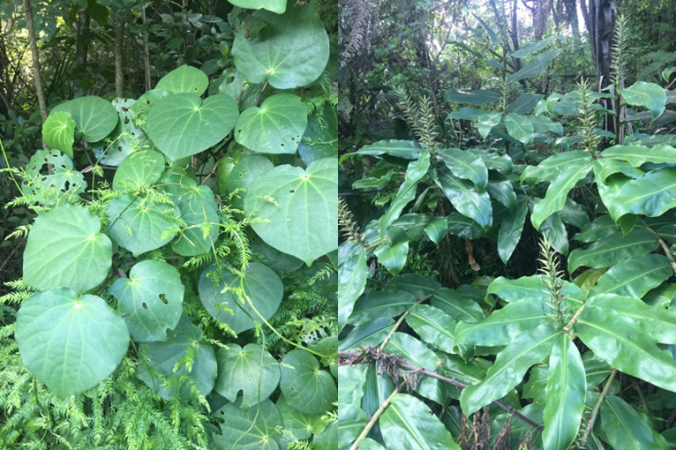
 

weeds

Climbing asparagus (Asparagus scandens) (Left) and wild ginger (Hedychium gardnerianum) (Right) in  Auckland’s local parks

What do we need to do?

This is an unprecedented opportunity to invest in Auckland conservation. Do you really want to be ‘doing your thing’ over the next 10 years in an Auckland with further declining environmental and health outcomes? Having biodiversity isn’t just a ‘nice to have’ – it’s essential for healthy, happy Aucklanders.

I’ll be asking for a targeted environmental rate that will halt the decline of our biodiversity – Option B ($47p.a.) won’t cut it – we need to fully fund the Regional Pest Management Strategy at ~$60 per residential ratepayer per year. This hasn’t been put forward as an option – but you can still ask for it by ticking ‘other’ and specifying $60 or full RPMP in the comments section

Come and ask me questions about the environmental aspects of the 10-year Budget at the Auckland Conversations Panel Q&A – Margaret Stanley, Rod Oram, Nicola Toki, Hayden Smith – facilitated by Bernard Hickey. This Thursday 22nd March, Lower NZI, Aotea Centre, doors open 5pm.

Have your say before the 28th March by submitting here.

You can also have your say on the Regional Pest Management Plan.

*Disclaimer: As a South Islander who has lived in Auckland for 17 years, I’m not adverse to visiting South Island National Parks with great frequency!

IMG_9315 (2)

Dr Margaret Stanley is an Associate Professor in Ecology, School of Biological Sciences, University of Auckland and is the programme director of the Masters in Biosecurity and Conservation. Her interests in terrestrial community ecology are diverse, but can be grouped into three main research strands: urban ecology; invasion ecology; and plant-animal interactions.


Fighting extinction: should we make battle plans or not?

An estimated 150-200 species go extinct every 24 hours. Making plans to save them seems like a good idea, but no-one can tell us for sure.

In the midst of the sixth mass extinction event we are becoming adept at assessing the risk of accidentally extinguishing species as we go about our daily business. By the close of 2017 we had formally assessed the extinction risk of more than 90,000 species finding more than 25,000 to be under threat.

Nations have an obligation to protect species and they do so in a number of ways: setting aside nature reserves; enacting and enforcing protective laws; promoting environmentally-friendly practice, and helping communities become effective stewards of their wildlife. If they were applied well, these measures would keep most species off the threatened list. But for now, and for the foreseeable future, many species need us to take more direct and more urgent action.

“You’ll never plough a field just by turning it over in your mind” – Irish Proverb

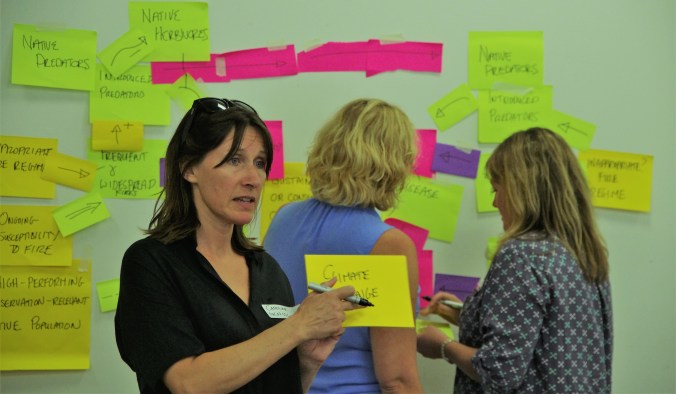
Before working in conservation I’d imagined that knowing why a species is threatened, and doing something about it, were similar things. In reality the gap between knowing and doing is large (Knight et al. 2008). We will need to bridge this gap for there to be better outcomes for threatened species.  The discipline of species conservation planning can provide a valuable transition between the clean and tidy zone of objective, transparent risk assessment and the murky, swampy area in which people attempt action with incomplete information and (often) inadequate resources.

Assessing – planning – acting – is a cycle

Planning in the right way, with the right tools, can give us the space to think aspirationally about what it means to save a species (Redford et al., 2011). It helps us to turn these aspirations into clear goals, to understand the challenges to achieving those goals, and to identify, evaluate and decide the most appropriate strategies with which to attack them. Planning requires us to think about who will take on the work, how they will be supported, and how progress will be tracked and evaluated.

IMGP0315 (2)

Photo: Planning for Western Ground Parrots, Australia

Many have found this to be useful work, citing moving examples of improved trajectories for species post-planning. Others remain skeptical. Published reviews of the extent to which species-focused planning has contributed to conservation success are rare, despite the thousands of plans written worldwide. By those who have attempted it, objectively demonstrating the effectiveness of species-focused plans has been described as everything from not easy (Gimenez-Dixon and Stuart, 1993), to impossible (Fuller et al., 2003). Further, while some multi-plan reviews conclude success (e.g. Schultz & Gerber 2002; Taylor et al., 2005), in others apparent success disappears once biases are accounted for (e.g. Bottrill et al. 2009).  Despite this ambiguity, species conservation donors increasingly require evidence of clear and comprehensive species conservation plans before committing to fund action.

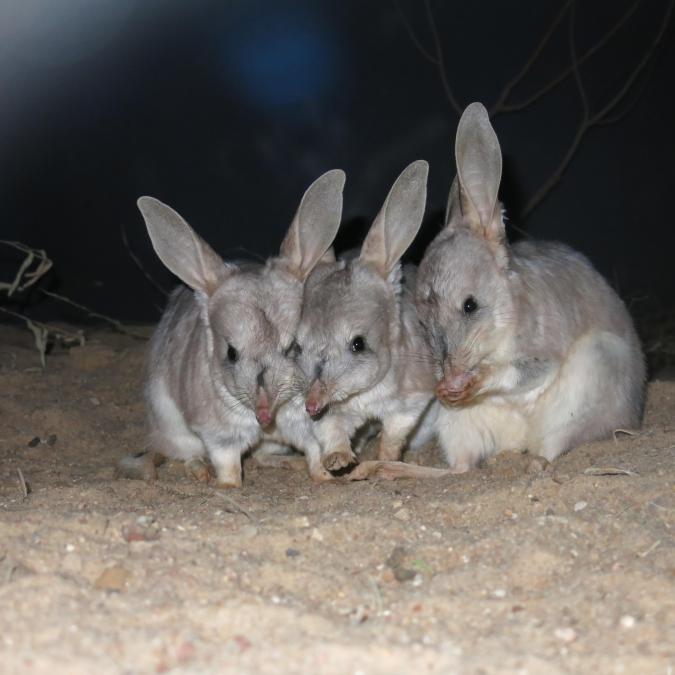
Bilby_CBSGBook3

Hard data on the value of formal planning and on the comparative value of different planning approaches, would provide clearer direction and support to those struggling to move more species from assessment to action.

My research

For the past 30 years, the IUCN SSC Conservation Planning Specialist Group has been working with partners to convene large, science-based, stakeholder-inclusive planning workshops around the world, for threatened species. I am interested in mining the information collected by the organisation over this time, to see what light it can shed on this complex topic.

Caroline Lees is a PhD student at the School of Biological Sciences, University of Auckland. She is supervised by Jacqueline Beggs and Anna Santure, from the University of Auckland,

The Effect of the Allee Effect

Posted by Hester Williams @HesterW123

When a population is small, or at low density, the classical view of population dynamics used to be that the major ecological force at work is the release from intraspecific competition – the fewer we are, the more we all have, and the better each will fare…

Gold fishBut in the 1930s, an ecologist named Warder Clyde Allee used goldfish in tanks to demonstrate experimentally that conspecifics had a beneficial influence on each other and survived better in larger groups. This led him to conclude that a certain degree of aggregation (and consequently higher population density/size) can improve the survival rate of individuals, and that cooperation may be crucial in the overall survival of the population. This is basically because larger group sizes provide individuals with more opportunities to mate, defend themselves, feed themselves, and/or can work together to alter their environment in a beneficial manner to the whole group – too few and we might not fare so well!
Allee’s idea on the unsustainability of small populations is today known as the Allee effect and is formally defined as: ‘an increase in individual fitness and/or per capita growth rate, caused by an increase in population size or density’.

The Allee effect can be generated through several mechanisms in small populations including: difficulty in finding a mate, pollen limitation, inability to satiate predators, cooperative anti-predator behaviour, cooperative breeding, foraging efficiency, habitat fragmentation and habitat loss.

meerkat

Cooperative living: The Southern African meerkat (Suricata suricatta) lives in groups of up to 40 individuals and is a prime example of how cooperation can improve survival. Responsibilities such as baby-sitting and raising the young, foraging, burrow maintenance and standing guard are shared. They also huddle together for warmth, and band together against rivals and predators. If group sizes fall too low, local population crashes can ensue.


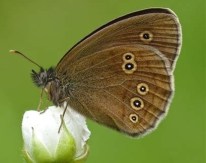
ringlet butterflyHabitat fragmentation and loss: Small and more fragmented patches of woodland habitat decreased the resilience and survival of populations of the ringlet butterfly Aphantopus hyperantus by reducing successful dispersal between patches and build-up of sufficient population sizes.


Why does the Allee Effect matter?

The implications of the Allee effect are potentially very important in many areas of ecology and the practical management of population numbers, whether aiming to increase or reduce them, is strongly affected by this effect.

In Conservation the prevention of population collapses is a priority, and it is widely acknowledged that populations of small size are often at greater risk of extinction.

OLYMPUS DIGITAL CAMERAWith only around 100 individuals scattered in the wild (some experts believe only 30!), the Sumatran rhino, Dicerorhinus sumatrensis, is on the verge of extinction. This species is clearly in the grips of an extreme Allee effect – as numbers of individuals decline, factors associated with low numbers (e.g. narrow genetic base, skewed sex ratio, mate-finding, reproductive pathology associated with long non-reproductive periods) combine to drive numbers ever lower, even with adequate habitat and zero poaching. In a 2017 WWF Report experts urge that the days of “conserving” Sumatran rhinos are gone and that efforts to save this species should be in advanced crisis mode to prevent extinction.

Another area of ecological studies where the Allee effect plays an important role is in Invasion Biology. It can inhibit the establishment of newly arrived species or in other cases delay or prevent range expansion of established pest species. This is the case for the gypsy moth (Lymantria dispar) where some of the isolated low-density colonies founded by long-distance dispersal go extinct without any management interventions, simply because of the Allee effect.

The Allee effect also plays a critical role in Biological Control programmes (the introduction of a natural enemy species to control a pest species) where success often depends on releasing sufficient numbers of individuals to ensure establishment of the natural enemy species.


My Research:

The Allee effect is a key focus in my PhD studies. I am studying the establishment success of small, isolated populations of Neolema ogloblini, a beetle introduced as a biocontrol agent for Tradescantia fluminensis in NZ. The aim is to determine whether an Allee effect plays a role in the population dynamics of this beetle and to identify the mechanism driving the Allee effect. This project will generate a better understanding of the key factors that affect biocontrol agent establishment and also invasion success of pest species.

hester.jpgHester Williams is a PhD candidate in the School of Biological Sciences, University of Auckland and is stationed with the Landcare Research Biocontrol team in Lincoln, Canterbury. She is interested in invasion processes of both insect and plant species. Hester is supervised by Darren Ward (Landcare Research/University of Auckland) and Eckehard Brockerhoff (Scion), with Mandy Barron (Landcare Research) as advisor. Her studies are supported by a joint Ministry for Primary Industries – University of Auckland scholarship. The project is an integral part of an MBIE program “A Toolkit for the Urban Battlefield” led by Scion.