Native Bees…What’s the buzz?

Did you know that there are 27 species of native bees in New Zealand that are found nowhere else in the world? If your answer to this question was ‘no’, don’t worry – you are not alone! While most people are familiar with the ‘honey bee’ and ‘bumblebees’ (species that have been purposefully introduced to New Zealand to improve the pollination of crops), native bees often go unnoticed.

Most native bees in New Zealand are solitary and nest in the ground. All native bees consume pollen and nectar, and have similar life cycles. Female bees construct the nests in which their young are raised by digging blind-tunnels in the soil or using pre-existing tunnels in plant material. Each nest contains a cell in which the female bees place all the food that their larvae will need. They then deposit an egg and seal the cell to avoid contact with that part of the nest until the new bee has developed. Male bees on the other hand spend most their time feeding, mating and resting.

IMG_1514

Native ground-nesting bees mating (photo by Anna Kokeny).

During the active flight season (mid-spring to early autumn), thousands of individuals nest alongside each other, forming large communities. By the end of autumn, adult bees die but the larvae overwinter until they emerge in mid-spring and the cycle repeats!
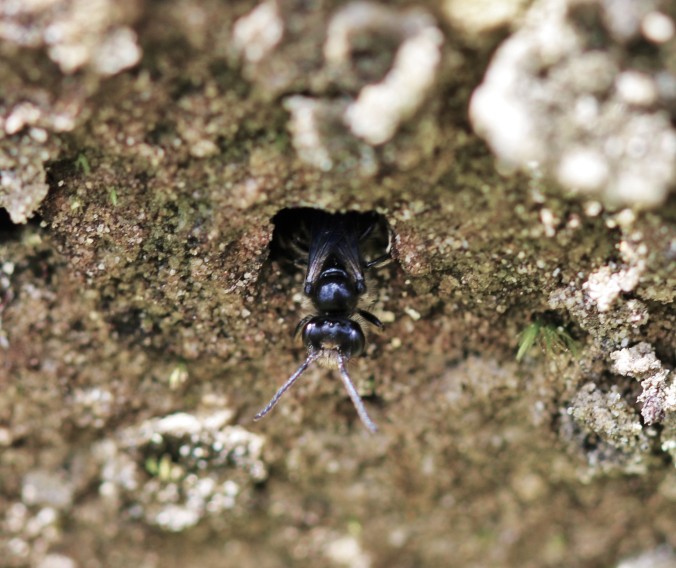
IMG_1521 (3)

Native ground-nesting bee emerging from its nest (photo by Anna Kokeny).


Studying native bees can be difficult as there are few ways to easily monitor them. As a result, there is much to learn about their populations, diversity and distribution throughout New Zealand. The aim of my master’s project is to investigate how soil characteristics influence the distribution of solitary-ground nesting bees in the Waikato and Northland region. In order to do this, I am analysing soil samples collected from sites with native bees and sites without native bees and comparing this to the abundance and diversity of native bees. Already, my summer sampling has revealed that the most common species of native bee within those regions are Leioproctus paahaumaa and L. imitatus.
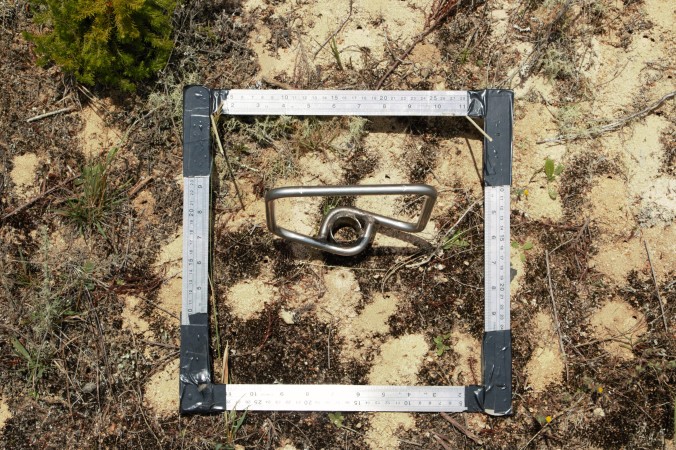
IMG_2435

Collecting soil sample from a native bee nest site using a soil corer (photo by Anna Kokeny).

The two most frequently asked questions I’ve encountered whilst collecting data were: “do they make honey?” and “do they sting?” No, native bees do not produce honey and will very rarely sting humans. So, why should we care about them? Native bees are key pollinators of New Zealand’s native flora. They are known to pollinate a wide range of plants including mānuka, kānuka and pohutukawa.
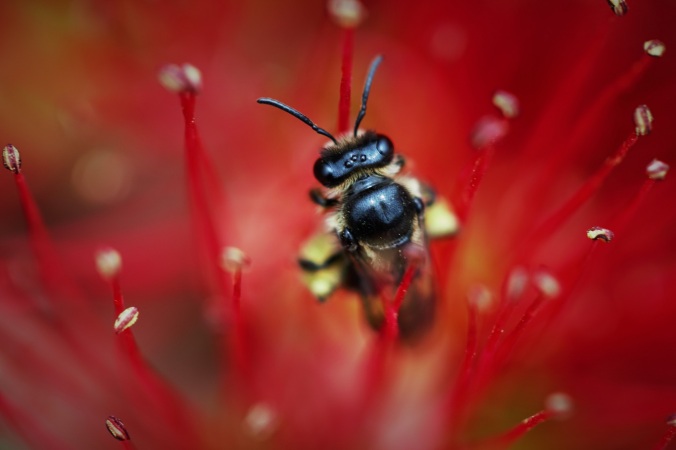
IMG_2255 (44)

Native ground-nesting bee laden with pohutukawa pollen (background yellow colour)(photo by Anna Kokeny).

IMG_1814 (2)

Native bee foraging on manuka flower (photo by Anna Kokeny).

Also, surprisingly Leioproctus bees can open a mistletoe flower (Peraxilla tetrapetala) by biting the tip of the bud. The main pollinators of mistletoe are bellbirds and tūī, but since introduced pests have significantly reduced bird numbers, native bees have partially replaced them as pollinators (Robertson et al., 2005).

 Get involved

To find out more about native bees join this Facebook group. This page is dedicated to NZ native bees – what they look like, where they live, what they do and how we can support them.

IMG_0384 (4)

Anna Kokeny is a MSc student in the Centre of Biodiversity and Biosecurity, School of Biological Sciences, University of Auckland. She is interested in the distribution of native solitary ground nesting bees in the Waikato and Northland regions. She is supervised by Jacqueline Beggs, Jamie Stavert, Anne Gaskett and David Pattermore (Plant and Food Research).
 

Why do I care about conservation?

Posted by Samantha Lincoln @slin247

With the increasing prevalence of technology and social media, and the ability to widely disperse information, I find myself asking why I have followed a path of research and conservation. Is it with the aim of publishing in the most prestigious journals to add gold stars to my CV, or because the academic community is the most effective place to disperse knowledge? This is a question I’m yet to answer, but as my career progresses public interaction seems to be where I personally can make the greatest difference. I have always wanted to give a voice to those who cannot speak for themselves and help our native species which have been under threat for so long. This blog is but one way members of Ecology Ngatahi are able to share our knowledge on a public platform; I encourage others to take a moment to remember why they do what they do and how best to truly make a positive impact in their environment.

Over the year of my Masters focussing on domestic cats (Felis catus) in urban habitats, I have found myself repeatedly compared to Gareth Morgan in a negative light. His outspoken opinions on the negative impacts of cats in Aotearoa have often isolated people from important discussions due to his cold assessment of cats, however it has also brought an important issue into public discussions. Many argue that pet cats have positive impacts due to their predation of mice and rats, and that they only prey upon common birds, and ‘my Fluffy isn’t a hunter’ – the list goes on. But there is unequivocal proof that cats do have negative impacts upon our native species, and that what cat owners see is not representative of their beloved’s total kill count. A US study found less than a quarter of kills were returned home. Rodents are still present at high levels in our urban parks despite cats. I caught 131 ship rats (Rattus rattus) and 7 Norway rats (Rattus norvegicus) over just five nights (1255 corrected trap nights) at eight urban Auckland bush fragments, at sites with plenty of cat activity.

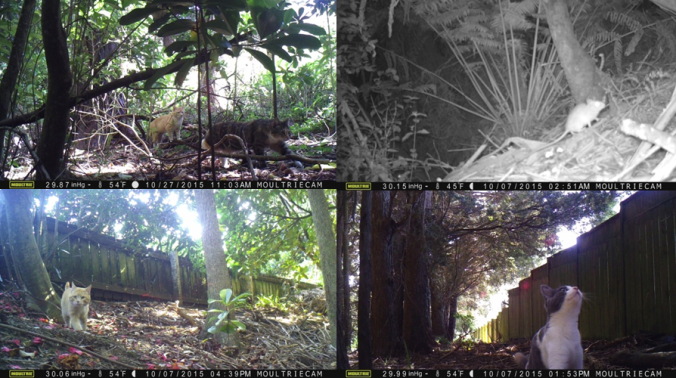
Pic1

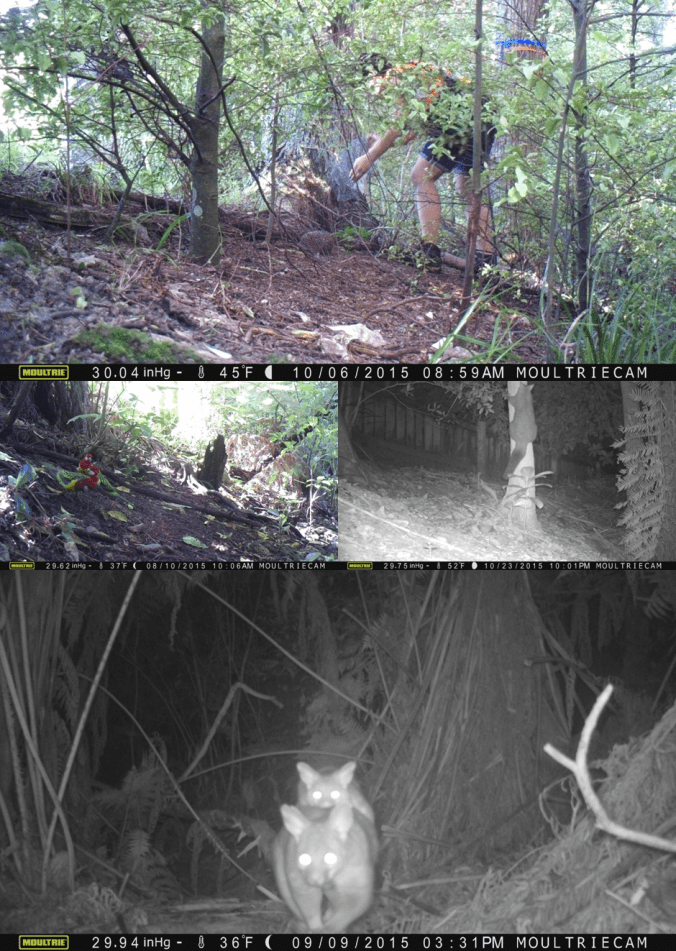
Clockwise from top left: a cat duo on the prowl at Walpole Reserve, a rat visiting Arch Hill Reserve a few hours after a cat passed through, a cat visiting Peretao Reserve, and another cat at Walpole Reserve. Source: Moultrie 990i cameras; Sam Lincoln.

Ecology can be a tangle, which is why single species control for pest management can lack luster compared to more comprehensive programmes. Large scale projects with generous community input like Cape to City are a great way to inspire and educate the public; putting academic findings to practice while encouraging future generations of scientists. We need to continue open discourse regarding pest management of all pest species, treating ecosystems as integrated systems which won’t be fixed by single species control. As scientists, it is our responsibility to ensure relevant information is made available to the public in a readily consumable format to dispel misinformation and encourage active conservation.

Despite some of our pest species being adorable, we must act to save our natives.

Pic2

From top: a hedgehog (Erinaceus europaeus)  being released from a live capture trap at Peretao Reserve, a party of Eastern Rosellas (Platycercus eximius) at Gretel Reserve, a tree-hugging possum (Thrichosurus vulpecula) at Walpole Reserve, and a possum family photo from Sunnynook Reserve. Source: Moultrie 990i cameras; Sam Lincoln


Sam Ln webSam Lincoln is an MSc student in the Centre for Biodiversity & Biosecurity, School of Biological Sciences, University of  Auckland. She is trying to disentangle interactions between domestic cats and rats in urban environments. She is supervised by Margaret Stanley, John Innes and Al Glen.


The Science & The Art of Camera-Trapping

Posted by Robert Vennell @RobertVennell

From the very beginning, camera trap images have fascinated us.  In the 1890’s George Shiras III – “Grandfather Flash” – developed the first true camera-traps using trip wires and animal lures. When an animal triggered the wire it activated a magnesium flash gun that detonated in a blinding explosion of light that sent animals scattering in all directions. The images he captured were the first night-time wildlife photos ever created and revealed eerie snapshots of a hidden world.

George Shiras III - Camera Trap Photos

George Shiras III “Grandfather Flash” (top left) used a system of trip wires to capture animal photos as early as the 1890s. Source: National Geographic

In the past few decades camera traps have undergone a revolution as a scientific monitoring tool and advances in technology along with a huge reduction in price have led to an explosion in camera trap research. And yet camera traps remain unique as a monitoring tool as they not only collect valuable data, but they produce fascinating images that retain their power to amaze and inspire.

In this way, camera traps represent a unique blending of science and art. They allow us to investigate the natural world, but also package and present it in an engaging way. Raw data has never looked so delicious and interesting; arriving pre-wrapped in shiny packaging, immediately ready for consumption.

Raw data has never looked so delicious and interesting”

As such, camera-traps offer us a monumental opportunity for science communication. Anyone can immediately appreciate and understand the data – allowing us to bridge the gap between ‘experts’ and the public, and open up a dialogue about a range of different issues.

Wildlife Camera Trap Photo of The Year - BBC

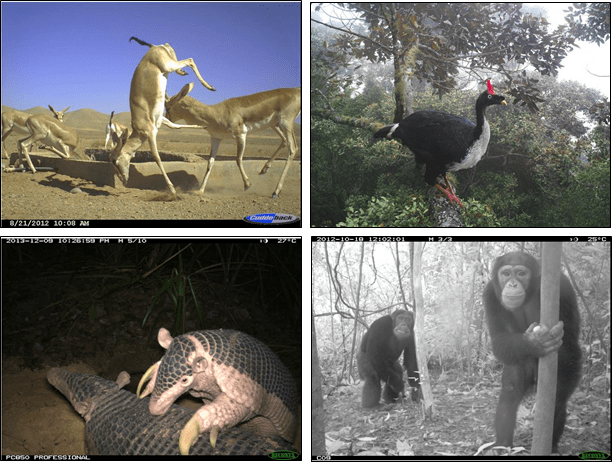
Commended photos from the BBC Wildlife Photo of the Year Competition. Top left: Goitered gazelles by the Iranian Cheetah Society. Top right: Horned guan by Javier Rivas. Bottom left: Baby giant armadillo playing by Pantanal Giant Armadillo Project. Bottom right: Chimpanzees by ARTP and GRNP.

However, with such a unique opportunity it is important that we don’t get carried away with the art and forget about the science. It’s very easy to collect camera trap data – the hard part is knowing what to do with the data. What do the images of animals we collect actually mean? Do they simply provide evidence that a species exists in an area, or can we use them to ask deeper questions about whether or not our conservation actions are working?

“What do the images of animals we collect actually mean?”

This brings us to my research topic this year. I’m going to be studying feral pigs and the damage they cause to native forests by rooting up the undergrowth. I’ll be using camera-traps to monitor the abundance of feral pig populations – and will undoubtedly collect a vast amount of fascinating pictures. But I want those pictures to be as meaningful as possible.

Feral Pig, Hawkes Bay - Patrick Garvey

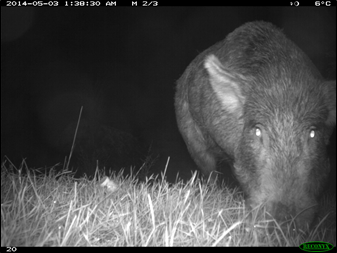
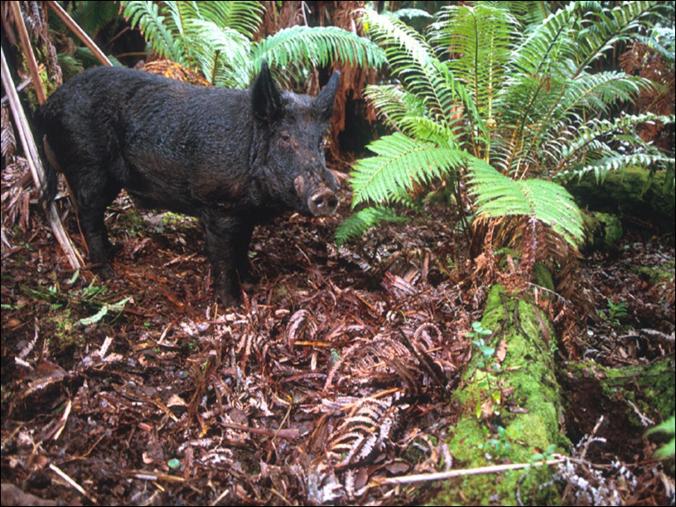
Feral pig in Hawkes Bay, New Zealand. Source: Patrick Garvey

In New Zealand conservation, the overwhelming majority of monitoring funding goes towards results-based monitoring – a “how many pigs did we kill?” mentality that doesn’t answer the more fundamental question of “did killing all those pigs actually achieve our goals?”.

What I hope to do is create a damage function that links the number of pigs on the cameras with the damage they cause to the environment. This should help managers around the country set meaningful targets for pig control that will help protect and restore native forests.

That’s the scientific message that I really want to communicate with my research, and luckily for me I’m going to be armed with arsenal of tasty visual treats to help me do it. I’ll be sure to share them with you as I go.

Robert Vennell - UOA.jpgRobert Vennell is an MSc student in the Centre of Biodiversity and Biosecurity, School of Biological Sciences, University of Auckland. He is supervised by Margaret Stanley, Mark Mitchell (Auckland Council), Cheryl Krull (AUT) and Al Glen (Landcare Research). He also writes about the history, meaning and significance of New Zealand’s native tree species at www.meaningoftrees.com

Turning the black swan white: lessons from ‘Black Swan Theory’ on identifying and mitigating risks through collaboration

Posted by Rebecca Lehrke @rmlehrke

It would be pretty catastrophic – albeit unlikely – for a fire to sweep through your lab destroying all your research with it. On the other hand, forgetting to save the paper you are working on and so losing the last few hours of productivity, though slightly less painful, probably happens quite frequently to the best of us. Both events carry risks and have the potential of occurring. So which event is more important to prepare for or could collaboration remove the need to decide?

Understanding the balance between the probability of an event occurring and its consequence is important when managing wildlife. Take my current research topic for example – bird strike by black swans. Sparrows hit planes on a daily basis, but their impacts are usually minimal. Black swans on the other hand rarely hit planes. The difference is, when a black swan hits a plane the impact is equivalent to a Holden Commodore VE Sedan hitting a brick wall at least 15km per hour. This kind of impact can destroy a plane’s nose cone costing over $25,000, let alone the risks if it enters an engine. So what event should we be most concerned about?

Swan

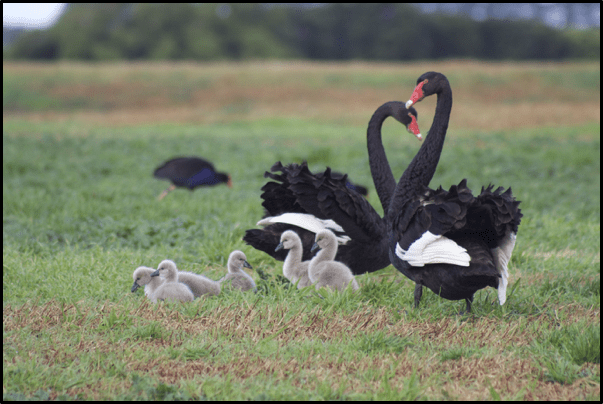
Black swan (Cygnus atratus) pair with cygnets at Ambury Regional Park, Auckland.

Unfortunately, there usually aren’t simple answers to balancing risks, and in conservation biology, the survival of a species could be on the line. If we ignore high-risk but low-probability events an endangered species could go extinct because a 100-year storm event wipes out the last breeding pairs on an island. On the other hand, ignoring day-to-day impacts of resource supply could also lead to its extinction over time.

black_swan

“The Black swan: The impact of the highly improbable” book cover.1

Economics has a long-standing concept that conservation and biosecurity managers could be using in these situations – Black Swan theory. According to Taleb ‘Black Swans’ are events that are unexpected, high impact and can often be explained or predicted in hindsight. Just like that 100-year storm event. Taleb warns that we could waste a lot of time – and money – trying to predict all these ‘Black Swans’. Instead our management plans should be robust enough to mitigate the negative impacts of unexpected events.

Although examples of such contingency plans being used in management programmes exist, it is often on an ad-hoc basis. This is where collaboration and synthesis across disciplines comes in. A devastating 100-year storm may not be common but if you know it is a natural part of the system, you can reduce its impacts, whether that means splitting your population across multiple islands or some other contingency plan.

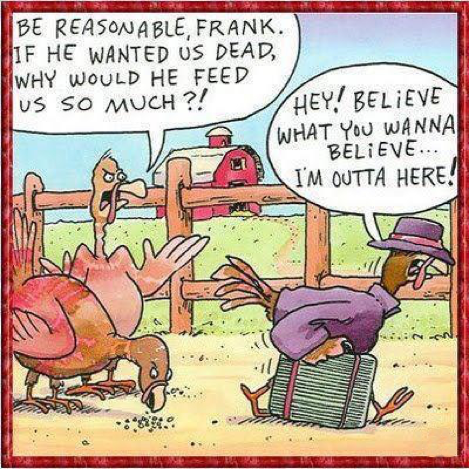
As ecologists and managers we should always be discussing our study systems with our peers in different disciplines. As Taleb puts it, what the turkey may not see coming the butcher probably does. So let’s be the butcher not the turkey! Get another perspective, share knowledge and collaborate more often. It may not prevent a fire from sweeping through your lab, but seeing your lab from a fireman’s perspective might help you ‘identify’ these risks so you can ‘mitigate’ them by backing up off-site more often. Thus reducing the impacts and “turning the Black Swan white”1.

Turkey

Being the butcher, not the turkey. Retrieved from: http://bit.ly/1pn1vte

Rebecca

Rebecca Lehrke is an MSc student in the Centre for Biodiversity & Biosecurity, School of Biological Sciences, University of Auckland. She is using movement ecology to assess the efficacy of disturbance-based management of black swans at the Auckland Airport. She is supervised by Todd Dennis and Margaret Stanley.

  1. Taleb, Nassim Nicholas (2007), The Black Swan: The Impact of the Highly Improbable, Random House, ISBN978-1400063512


Science in shiny wrappers

Scince in shiny wrappers

Posted by Josie Galbraith @Josie_Anya

Something all scientists share is an inherent understanding that science is a worthy pursuit. That knowledge, like pie, is worth seeking. We are prepared to read paper after paper – countless paragraphs of text – for the betterment of our understanding. But even amongst ourselves, we usually draw the line at reading literature outside our fields of interest. And fair call – ain’t nobody got time for that. Papers outside our broad disciplines may as well be written by aliens. Alien subject matter, alien concepts, alien terminology. Crossing the disciplinary event-horizon doesn’t exactly make for easy digestion or light bedtime reading.

We all want sweet juicy visual treats.  

Not paragraphs.

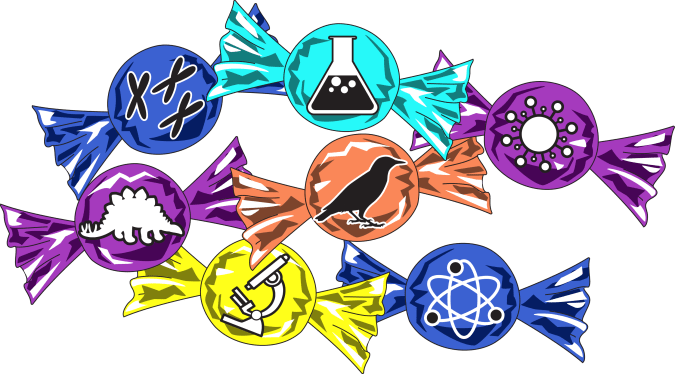
What we all want, what we really really want, is for someone to hand us delicious bite-sized science in shiny wrappers. Sweet juicy visual treats, like graphical abstractsinfographics and animations (check out this sweet as bird feeding animation – yeah you got me… it’s mine). Data visualization and visual storytelling aren’t new concepts, but in this digital age they have become more important than ever. Increasingly, journals across the spectrum are recommending or even requiring visual summaries of research. Visual representations of research are many more times effective at engagement than legions of characters lined up on a page (there’s a graphic of that). Do not underestimate the power of the drawn lines.

Liv_thesis_draw-01

You’ve probably stopped reading already to check out this awesome graphical summary or #ArtStract from  deciphered.com 

What’s more, this kind of science is also perfect to share with all manner of non-sciencey folks. Science communication is, after all, a hugely important part of science and part of our responsibility as scientists (scidev.net editorial, Brownell et al. 2013 ). Not all of us are comfortable giving interviews via conventional channels (TV, radio, articles). Furthermore, mainstream media have a tendency to cover only those articles that are sexy, sensational, or published in the top journals. But, with the age of social media, opportunities for communicating science to the world in graphical ways have skyrocketed and we can do it ourselves. We don’t have to wait to be asked. Make the most of it. Turn your fancy words into shiny pictures, because pictures are great. Great for society and great for our own science.

Don’t wait to be asked. 

Turn your science into a shiny picture today!

It is a vastly useful academic exercise to distill your research down into a single picture or a 60-sec animation. What is it that really matters about your study? What are the vital pieces? And these days we need to do more distilling. While opportunities to communicate science are increasing, attention spans are shrinking. Sharing scientific findings graphically is the perfect answer.

A final comment: don’t let artistic skill or lack thereof stand in your way. Graphics software is pretty awesome these days (your institution may already have a license for Adobe Illustrator, or there are many free apps too). Failing that there are people out there to help you with the research make-over you’re looking for (shout out to deSciphered and maybe future me).

Jo ground cricketJosie Galbraith is a PhD student in the Centre of Biodiversity and Biosecurity, School of Biological Sciences, University of Auckland. She is supervised by Margaret StanleyJacqueline Beggs and Daryl Jones (Griffith University, Australia). She is also known to dabble in the dark arts – painting, illustration, graphic design, and animation.

Science in wrappers image © Josie Galbraith.  This image includes vectors designed by zhaolifang and larvarmsg Vecteezy.com.

Challenges of doing a PhD with a chronic disease

Posted by Carolina Lara @carislaris

 About 15% of the world´s population have some form of disability and this rate has been increasing (due to a multitude of factors), particularly for chronic health problems. Even though chronic conditions are more common than suspected, most people are not aware of what it is like undertaking a PhD while having one. And of course openly talking about it is not easy, because who likes to be seen as vulnerable and weak? So, it is likely that one of your colleagues might be experiencing this struggle but keeping it quiet.


chronic

An autoimmune disorder (most of them chronic) occurs when the body’s immune system attacks and destroys healthy body tissue by mistake.

I am now writing about my own Little Beast (as I have named my condition) as a way to raise social awareness about living with a chronic disease and studying for a PhD. I was diagnosed with a chronic autoimmune disorder called Ulcerative Colitis six years ago; eventually, this diagnosis changed to Crohn´s disease. There are all sort of personal challenges to face, especially because each individual and each chronic condition is different. The only similarities shared among chronic conditions are that despite treatment, they will not go away, and they will change our lives. And knowing that makes us experience anger, anxiety and depression. I am finally under remission thanks to a new medication but I am still battling fatigue caused by anaemia (because, well, medication has side effects). I am aware that this state will not last forever, unfortunately. And it has nothing to do with being pessimistic, it just the nature of chronic diseases.

fatigue

Fatigue is a common symptom of autoimmune disorders & often becomes a limitation while doing a PhD.

No one warns us about how difficult doing a PhD can be, not only from an academic point of view, but from the personal pressure it conveys. Add this to a variable dose of daily physical discomfort and fatigue and it becomes unbearable at some point. There are good days, bad days and not-so-bad days. Getting up from bed can become such a challenge but also a great achievement. And yet, we will say we feel alright… but do we? Why can´t we just be honest and say “I feel terrible today, but despite that fact I am working”? Maybe because we only want to become, and be seen as, good scientists rather than “good scientists overcoming health struggles”.

Although this journey might seem lonely, support from family, friends, colleagues and supervisors play a big role. Against all odds, me and my Little Beast made it to New Zealand thanks to Margaret, my supervisor, who was happy to work with me even after warning her about my medical condition. I might talk more in detail about the personal and external challenges of living with a chronic disease in another post, but for now I might just take a nap.

Carolina2Carolina Lara M. is a PhD Candidate within the Centre for Biodiversity and Biosecurity, School of Biological Sciences, University of Auckland. Her research interests focus on seed dispersal networks within fragmented landscapes. She is supervised by Margaret Stanley, Jason Tylianakis, Karine David, and Anna Santure.

How many feral pigs did we kill? And why that’s the wrong question.

Posted by: Margaret Stanley @mc_stanley1 and Cheryl Krull @CherylRKrull

Too often pest control is focussed on the number of pests killed, rather than the actual benefits of removing the pests.

Most monitoring during pest management focusses on ‘results’ monitoring, which measures how many pests are killed during the control operation. However, the often forgotten, but more important type of monitoring is ‘outcome’ monitoring. This type of monitoring measures the true success of an operation by focussing on why the pests were killed in the first place. For example, outcome monitoring for a control operation targeting conservation damage by an herbivorous pest (e.g. brushtail possum) might be the ‘foliar browse index’ – which can indicate whether there is less damage to trees as a result of removing possums. The danger of only doing ‘results’ monitoring is that you’ll never know if you are achieving the biodiversity benefits you think you are. This costs money and the confidence of stakeholders.

stakerholders

The tide is starting to turn, with more investment in outcome monitoring. The key challenge is to link damage and damage thresholds to pest control operations. For example, some neat NZ research has shown that once you get above 4 rats per ha in podocarp forest, you start losing tree weta. Rat control operations can therefore be triggered at ‘damage thresholds,’ rather than undertaking regular control, saving money on pest control, and reducing the use of toxins.

This was our challenge posed by Auckland Council: we know feral pigs are causing damage to forest ecosystems, but how much feral pig control is enough? Feral pigs in dense temperate rainforests are notoriously difficult to count, and control is expensive.

feral pig image

Feral pig in rainforest. Photo Credit: Hawaii Volcanoes National Park

In our new paper, we report on how we used a 3-year pig control programme (ground hunting) to understand how control reduces pig densities, but most importantly, how pig control affects the rates of ground disturbance. We (the royal ‘we’ means Cheryl – as part of her PhD research) measured ground disturbance (rooting) by pigs throughout the Waitakere Ranges (Auckland, NZ) for the entirety of the hunting programme.

pig disurbance impacts

Feral pig rooting disturbance impacts. Photo Credit: Hawaii Volcanoes National Park

The control operation reduced the pig population by a third, but it reduced ground disturbance by more than half. When we simulated hunting regimes at different intervals, only the 3-monthly hunting interval achieved a constant reduction in ground disturbance. BUT, sending in hunting teams every 3 months is incredibly expensive and over time, starts to yield diminishing returns on that investment. Is a constant reduction in ground disturbance what we want? If managers switched to triggering control at unacceptable levels of ground disturbance (a disturbance threshold), would we still have worthwhile biodiversity outcomes?

So more appropriate questions for managers to ask rather than “how many pigs did we kill?” are “how much disturbance is too much?” and “when should we trigger feral pig control based on ecosystem damage?” One of the biggest issues for pest managers is the enormous cost of outcome monitoring. Getting clever about how we monitor and making sure we know what the monitoring means, is one of the challenges facing managers and scientists.

The next step in this story is about to happen. Masters student Robert Vennell is creating a density-impact function for feral pigs in forest. He’s trying to get to grips with how ground disturbance relates to the number of pigs detected on camera traps. Could this be a cheaper way to trigger control based on outcomes? Watch this space for his research story.

camera trap feral pig

Feral pig detected by camera trap. Photo Credit: Patrick Garvey

RESEARCH PAPER: Krull CR, Stanley MC, Burns BR, Etherington TR, Choquenot D. 2016. Reducing Wildlife Damage with Cost-Effective Management Programmes. PLoS One DOI: 10.1371/journal.pone.0146765

me2small Dr Margaret Stanley is a Senior Lecturer in Ecology, School of Biological Sciences, University of Auckland and is the programme director of the Masters in Biosecurity and Conservation. Her interests in terrestrial community ecology are diverse, but can be grouped into three main research strands: urban ecology; invasion ecology; and plant-animal interactions.


cherylDr Cheryl Krull is a former member of the Ecology Ngātahi lab group, completing her PhD on feral pigs and then as a postdoctoral fellow in the group. She is now a lecturer in the Institute of Applied Ecology New Zealand at AUT and is continuing her research into feral pig impacts and control, along with other conservation projects.

Harrowed sparrows and shrinking starlings

Posted by Sam Heggie-Gracie @SamHegGra

Birds are one of many taxa seen to be on the downslide globally, with 12% of all birds classified as threatened. Bird trends have been particularly well documented in Europe, and some of these studies have thrown up some interesting findings. In particular, it appears rarer birds are increasing in abundance, whilst the more common species are driving the brunt of the overall decline.

Spock’s famous adage “The needs of the many outweigh the needs of the few,” doesn’t normally apply in conservation, whereby common species are often overlooked in favour of protecting those that are rarer. It’s easy to take common species for granted. However, common species disproportionately influence the environment they live in as they form an especially integral part of the structure and function of their habitat. Commonality in ecology is (ironically) a rare trait, with only a few species lucky enough to have the right characteristics to multiply like nobody’s business and dominate an environment (think: humans). A decline of a once common species will be pretty bad news. In Europe, even the cherished, ever-present sparrows have taken a dive, as have starlings.

sparrowHouse sparrow (Image source: Fir0002/Flagstaffotos)

Some recent research has shown some of our own common birds such as tui may also be declining. Habitat destruction, invasive species and climate change pose threats to these birds, so it will be important to keep an eye on their populations.

By continuing to undertake informed bird-friendly actions (such as good bird feeding practices!), we can safeguard our inimitable native species from further loss. In terms of policy, a compact city as opposed to a sprawling one appears more favourable for bird communities, and this may be especially true for natives. Such city-scape planning alongside regular population monitoring may be increasingly required in order to mitigate biodiversity loss and assist both the many as well as the few.silvereyeSilvereye (Image source: Fir0002/Flagstaffotos)

Check out Josie’s endearing video on good feeding practices, and remember to keep a close eye on your cat this summer as baby birds begin to emerge!

N1qF4ytSkwb9gfQNFTejvhyrBfZZAtIMzrtb-MY7RRo

Sam Heggie-Gracie is an MSc student in the Centre for Biodiversity & Biosecurity, School of Biological Sciences, University of Auckland. He is investigating the drivers of bird composition in cities. He is supervised by Margaret Stanley and Cheryl Krull (AUT).


The pitfalls of Fiordland field work

Posted by Keely Paler @keely_paler

The first things that people say about Fiordland are that it’s a really beautiful place but the sandflies are the size of elephants. My recent trip to Fiordland proved they weren’t wrong. The sheer number of sandflies means that headnets are now my favourite fashion accessory. However the stunning-ness of the location more than made up for it.

In November, I went down to Te Anau, Fiordland to complete the first part of my master’s fieldwork. This adventure began with hastily rearranging flights to capture the best weather window. Because of New Zealand’s highly changeable weather this is an important part of ecological fieldwork in remote locations. Despite this planning, we arrived to an unexpected layer of snow, but these surprises are part of the fun of working in the field.


3

Open top chambers in alpine Takahe Valley, looking down to Lake Orbell

In order to get to our alpine study site in Takahe valley (in the Murchison Mountains of Fiordland), I had my first experience flying in a helicopter (a lot scarier than I imagined). This site is a particularly awesome place to conduct research because it’s where the ‘extinct’ takahe was rediscovered in 1948. Since this time it has been classed as a ‘special area’, accessible only to scientists and pest-control operators. This relatively undisturbed environment means it is an ideal place to study the effects of climate change on New Zealand’s unique alpine biodiversity. My master’s research will examine how insects respond to climate change using open-top-chambers to experimentally induce localised temperature increases). Insects are captured using pitfall traps, which will be collected during a second trip in March. Despite the sandflies, I can’t wait to go back.

4

Keely Paler is an MSc student in the Centre of Biodiversity and Biosecurity, School of Biological Sciences, University of Auckland. She is supervised by Darren Ward, Rich Leschen and Adrian Monks (Landcare Research) examining climate change and alpine insects.

Growing old with caterpillars

Posted by Zane McGrath

For the remainder of these summer months I will be searching far and wide for the kawakawa plant. It isn’t the odour emitted by its heart shaped leaves or berries I am attracted to, but the caterpillars hosted by the plant, which I will attempt to adopt and take back to their new home, the luxurious lab at Landcare Research. Although in highlighting the beauty of ecological research, and just to make things more confusing (see earlier posts by Sam and Carolina on ecological complexity), it is not the plant or the caterpillars that will be the main focus of my Masters research, but parasitoid wasps which emerge from the caterpillars.

DSC_0330

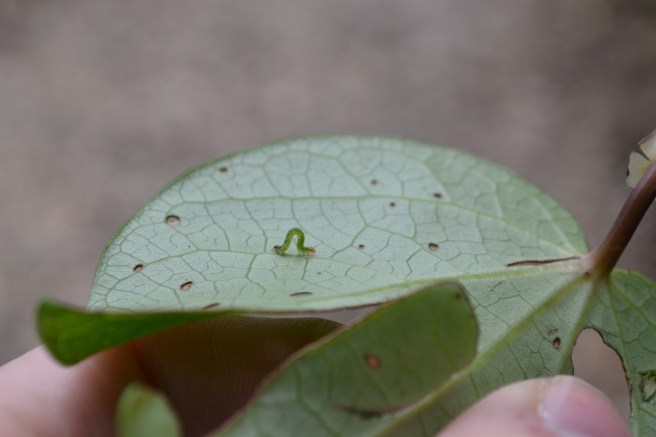
The kawakawa plant (top) and kawakawa caterpillar (bottom)

DSC_0327

Parasitoid wasps spend part of their life cycle within a host, such as a caterpillar, and basically eat their way out when ready to pupate, eventually killing the host. Fascinating or down right freaky (have a look for yourself in this video), parasitoid wasps have the ability to act as natural enemies for controlling agricultural pests. For my Masters research I will be focusing on whether Meteorus pulchricornis, a species accidentally introduced into New Zealand, is competing with native species for caterpillar hosts.

medium[1]

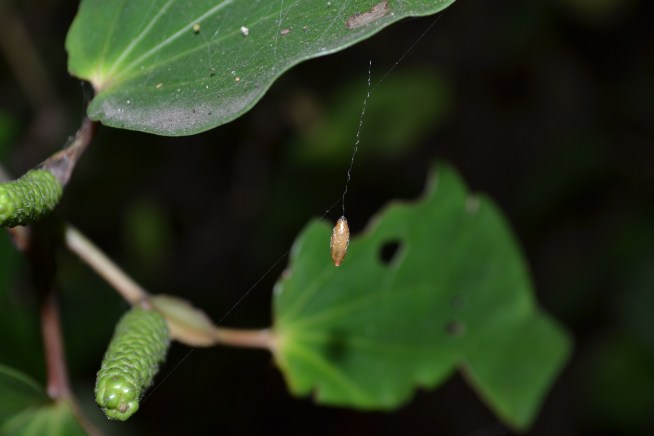
The culprit, Meteorus pulchricornis (Photo: iNaturalist.org) (top) and its cocoon hanging from a kawakawa plant, which is unique to the species (bottom)

DSC_0315

In order to understand this, the caterpillars I collect will be reared until they reach their fate. If I’m lucky, but the caterpillar isn’t, a parasitoid wasp will emerge.

This is where I must hone my husbandry skills. The caterpillars can grow considerably over the period of a month or so before pupating. They will be fed their favourite meal, a kawakawa leaf that is replaced every five to seven days. However, as a parent would say, the growing up process isn’t always a pretty sight. Their homes can become inundated in frass (caterpillar poo), and need I say the larger the caterpillar grows, the larger the frass… but hey, it’s all part of being a parent.

DSC_0383

Frass and a caterpillar

Zane McGrath is an MSc student in the Centre of Biodiversity and Biosecurity, School of Biological Sciences, University of Auckland. He is supervised by Darren Ward and Graham Walker (Plant and Food Research, Auckland) examining parasitism by exotic species in native environments.