Many hands make a PhD: working with volunteers

by Renee Johansen (rjoh103@aucklanduni.ac.nz)

Last month I wrapped up the field work for my PhD, which is about the biogeography of fungi which live in the roots of sand dune grasses. I have enjoyed some fantastic travel, collecting roots from multiple sites in New Zealand, Australia, the United States, and the United Kingdom, but what I think about most when I reflect on my experiences is the fun I had working with a huge range of volunteers.
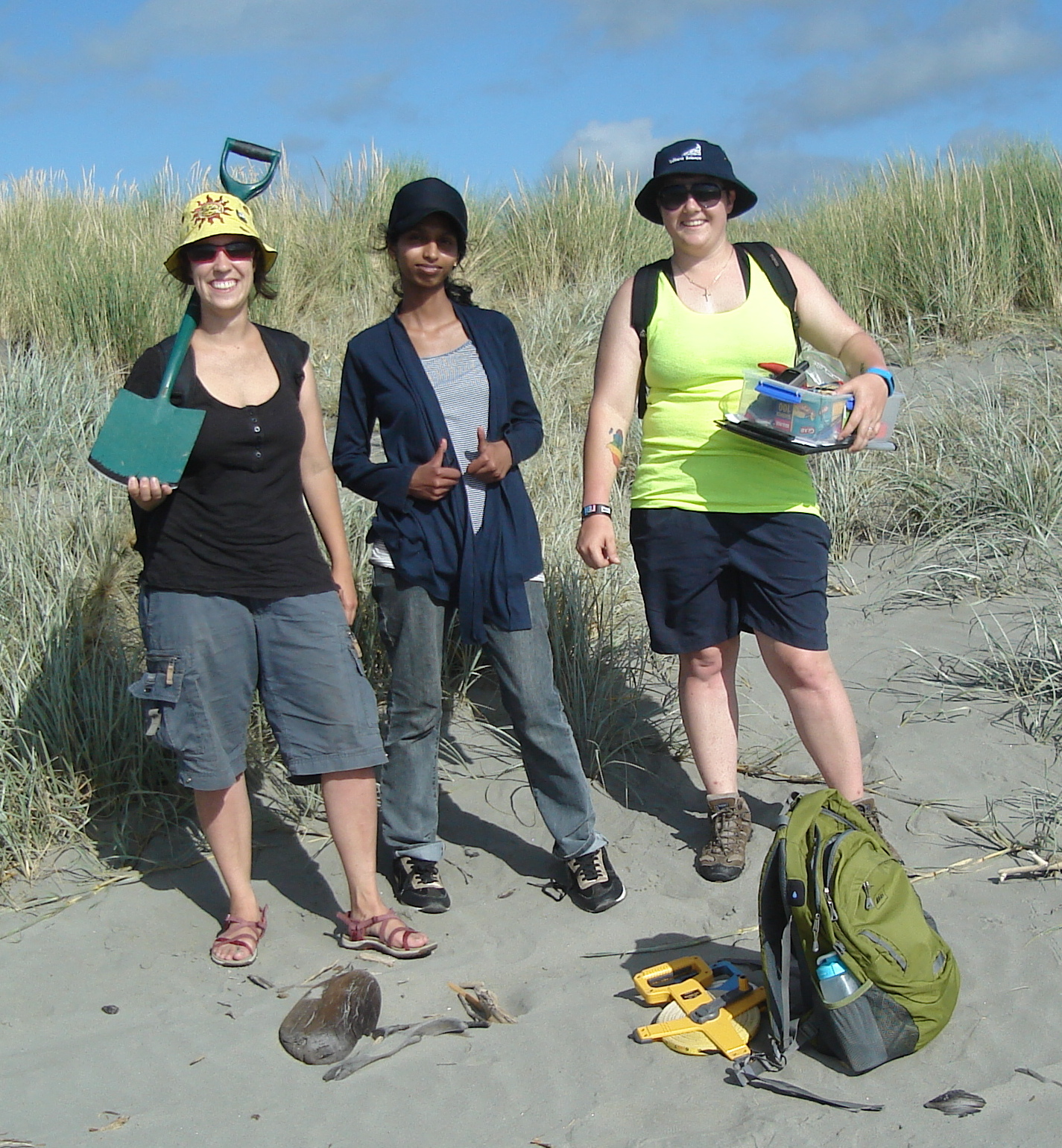
A great day to dig up a dune in New Zealand

A great (but hot!) day to dig up a dune in New Zealand – thanks team!

Not only was this enjoyable, but also essential given budgetary constraints. In addition to spending hours working in often difficult conditions (from full sun in hot temperatures to high winds and rain), some volunteers were incredibly generous, providing food, transport and even accommodation. Often the first time they saw me in person was when I got off a plane, train or bus to get in their car. Help was also given for sample preparation in the laboratory. Some volunteers inspected locations for me in advance and provided photographs. I found many people are interested in engaging in science, even if they don’t do research for a living. Altogether, 42 volunteers (and yes this includes a few friends and relatives!) gave their time to my project in the field and/or the laboratory. And of course my project is just one of many that uses volunteers.

Reaching out to volunteers and engaging their services takes courage and strategy! However I would encourage students to give it a try, particularly if it will expand the horizons of your project. It certainly helps if you have friends or relatives near your field location. Another obvious volunteer source is other students, through contacts of supervisors or perhaps university field clubs.

Discussing sterile techniques with lab volunteers in Liverpool

Discussing sterile techniques with lab volunteers in Liverpool

Undergraduates are often particularly keen, as volunteering can provide experience which helps them obtain post graduate study or work opportunities as well as ideas for their own research direction. Even emailing a lecturer in a relevant discipline can be fruitful – they may contact someone directly, notify their class or even come in the field themselves. Councils or land management organisations sometimes have lists of volunteers or can spare a staff member for a day. I also had the good fortune to work with retired professional biologists who were tracked down through universities and councils. Finally, local naturalist clubs (and their various incarnations such as botany, entomology, ornithology, mycology, etc.) can be very helpful, email addresses are usually available on their websites.

Putting a simple webpage about the project together (even just on your university profile) is a good idea as it can be included with an initial email to provide extra details, and validates your activity. While that vital first email can be short, it should include the basics like roughly when and where the work will take place. Ensure you are clear about skills required (or not required!) Some people lack confidence and think they don’t have enough experience when for my work at least, the ability to move around a sand dune was all that was needed.
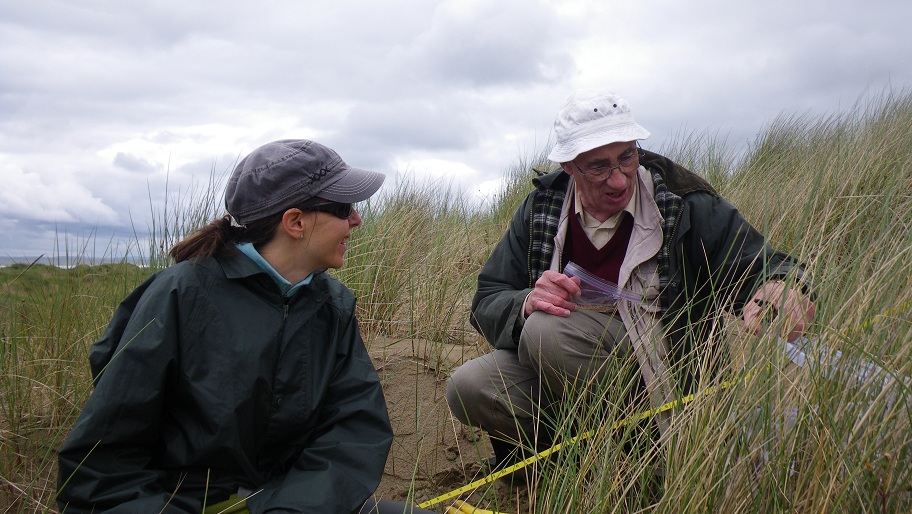
Bagging up roots in Wales

Renee and a volunteer bagging up roots in Wales

Once volunteers are engaged, be sure to keep in touch (swap cell phone numbers early on) and plan a reasonable work day that doesn’t exhaust people! Not everyone is used to long days of physical activity. Try to include ‘rain days’ in your schedule so work can be postponed if the weather gets too awful.

Relaxing post-dig in California

Volunteers relaxing post-dig in California

At the start of the day, provide a simple yet thorough explanation of the work being done and why. Don’t be afraid to supervise and offer polite corrections! Take meal breaks and provide snacks if you can. A cold drink on the way home is often greatly appreciated. If staying over at someone’s place or lots of time is given, providing small gifts or meals is a great idea. In some instances it may be appropriate to offer to provide a reference. Following such steps will encourage good working relations between students and volunteers – increasing the chances of successful project completion and a steady stream of volunteers for future students!
More on the new bee (Hylaeus euxanthus)

by Stephen Thorpe (stephen_thorpe@yahoo.co.nz)

Research Associate, University of Auckland

A week is a long time in biosecurity, and there have been two significant developments since my last post regarding a new bee, which has now been confirmed by Ministry of Primary Industries (MPI) as Hylaeus euxanthus.

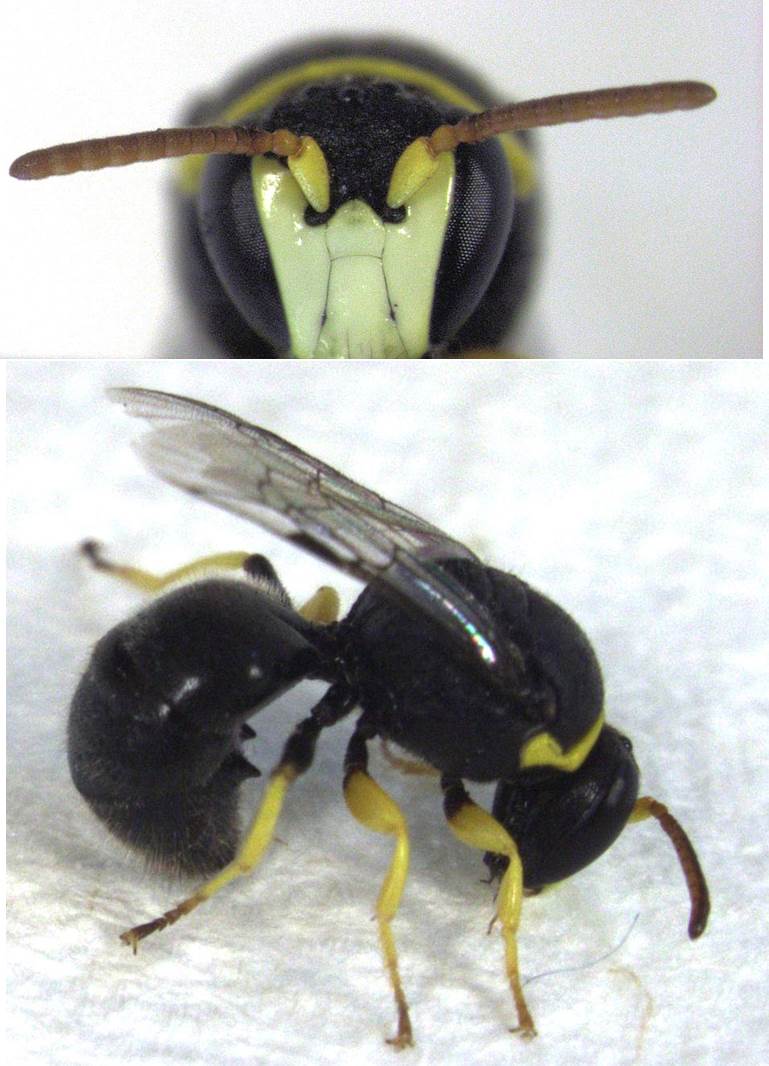
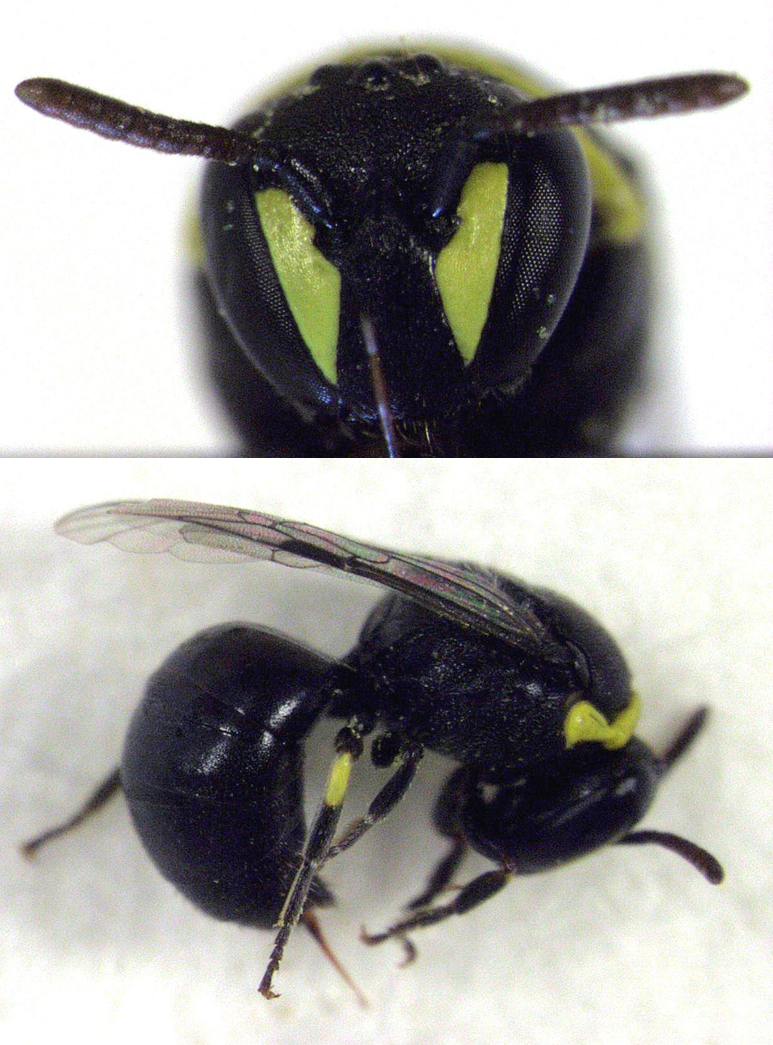
Female masked bee showing lack of yellow antennae and reduced face "mask" compared to male bee (see earlier post).

Female masked bee showing lack of yellow antennae and reduced face “mask” compared to male bee (see earlier post).

Firstly, on 5 March 2015, I finally found my first female bee! It was visiting fennel flowers on the Tamaki Campus. It is strikingly different to the male of the species (see photos).

The first antennal segment is not short, broad or yellow. The face “mask” is very reduced (as expected), and the legs are largely black, except for a conspicous yellow band on the hind pair. It is sufficiently different from the females of the other species of masked bees in N.Z., not to be confused with them.

Secondly, MPI have recently received specimens from two other locations; nearby Point England and Saint Heliers. I think it likely that this is the first season that the bee has been present in any numbers in Auckland, since people evidently are noticing it now. It also suggests that it may currently be restricted to, or at least most abundant in, a relatively compact area of east Auckland. Checking flowering fennel across Auckland would help reveal its current distribution.

Thanks go to Rudi Schnitzler (MPI) for his work on confirming the identification.

A new life in Singapore

chrissiepainting's avatarInvertebrate Behavioural Ecology Lab

I recently made one of those decisions which, although pretty normal for a lot of academics, meant uplifting my life in New Zealand and moving to Singapore. I finished my PhD almost 2 years ago now and have been lucky to get several postdoc positions, one at the University of Auckland (where I did my PhD) and a shorter stint at the Australian National University (playing with fiddler crabs in Darwin).

photos for blog(left to right) 1. Male Forsteropsalis harvestmen eating a fly, 2. Male Pantopsalis cheliferoides harvestmen, 3. male Uca elegans fiddler crabs jostling for a burrow

These opportunities allowed me to get publications from my thesis out, make some new collaborations and delve into new research areas. The time had come, however, to head off and do something different and so I jumped at the chance to take up a research fellowship at the National University of Singapore. Although exciting…

View original post 512 more words

A newbee in town!

by Stephen Thorpe (stephen_thorpe@yahoo.co.nz)

Research Associate, University of Auckland

The bees of New Zealand have been documented quite recently (2007) by the appropriately initialled B. Donovan. However, another one has recently turned up. So far, it is only known in N.Z. from six males collected by me, all on the Tamaki Campus, Auckland. It is a masked bee (see photo) belonging to the vast genus Hylaeus.

Keep on the lookout for this new bee in New Zealand. No females have been found yet.

Keep on the lookout for this new bee in New Zealand. No females have been found yet.

It belongs to a subgenus, Gnathoprosopis, not otherwise represented in N.Z. I have identified it as Hylaeus euxanthus, a common and widespread species in Australia (see Houston, 1981). MPI are in the process of getting the ID validated. The first two specimens captured had black mandibles, which is unusual for the species in Australia, and therefore put the ID in a little doubt, but subsequent specimens clearly have yellow mandibles. It would be useful to find females, which will have less of a yellow mask, but so far no luck.

The species may be of some interest to those studying pollination ecology in N.Z. There is clearly a lot of scope for further research on this species in N.Z. How widespread is it? Is it spreading? Will it compete with native bees? What are its flower visiting preferences? My specimens were found visiting kanuka flowers in November and December, and sweet fennel flowers in late February. The males have a pair of tubercles on the underside of the gaster (abdomen), which are variably developed. They are clearly visible in the lower photo. The species is immediately distinguished from other Hylaeus in N.Z. by having the first antennal segment (scape) short and entirely yellow.

REFERENCES

Donovan, B.J. 2007: Apoidea (Insecta: Hymenoptera). Fauna of New Zealand, (57) www.landcareresearch.co.nz/publications/books/fauna-of-nz-series/extracts/fnz57

Houston, T.F. 1981: A revision of the Australian hylaeine bees (Hymenoptera: Colletidae). II. Australian journal of zoology, supplementary series, (80) doi: 10.1071/AJZS080

Feeding our feathered friends

Posted by Jacqueline Beggs

New research by Josie Galbraith, Jacqueline Beggs, Darryl Jones, Ellery McNaughton, Cheryl Krull, and Margaret Stanley

PhD student Josie Galbraith measuring urban birds to assess their health status.

PhD student Josie Galbraith measuring urban birds to assess their health status.

People love feeding wild birds, even in New Zealand where most urban birds are introduced species. More than 5 million loaves of bread, 13 million pieces of fruit and 5 million L of sugar water are fed to birds in six New Zealand cities each year. That is almost 3 loaves of bread per person! The food used is not usually at the expense of the household budget as most people are feeding scraps to birds.

As well as putting out food, people like to provide water baths and plant trees to encourage birds into their gardens. Those who live in Wellington (New Zealand’s capital) were least likely to feed birds, but if you owned a free-standing house or a dog you were more likely to provide food.

Introduced birds are probably the main beneficiaries of bread and seed in urban New Zealand since not many native birds found in urban areas are grain feeders. Potentially, this may increase populations of introduced birds at the expense of native birds.

Disease transmission from birds congregating at a feeding site was also identified as a risk. However, given the importance of ensuring urban dwellers connect with nature, we are certainly not arguing that

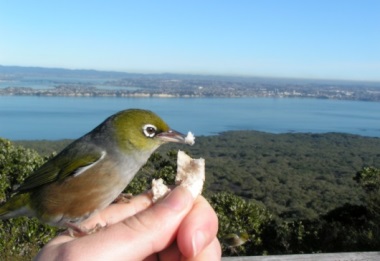
Silvereye are on of the few native birds in urban areas that eat bread.

Silvereye are on of the few native birds in urban areas that eat bread.

people should stop feeding birds, but improving how they clean feeding stations and considering putting out food more suitable for native species would be a good idea.

Questionnaires were sent to 3000 households in Whangarei, Auckland, Wellington, Nelson, Dunedin and Invercargill. The study achieved a 27.1% response rate, or 801 replies.

Read the published research online now at Biological Conservation http://dx.doi.org/10.1016/j.biocon.2014.09.038

Jacqueline Beggs is an Associate Professor in the Centre for Biodiversity and Biosecurity, University of Auckland.


Media links:
http://www.stuff.co.nz/environment/10644341/Kiwis-spend-dosh-on-bird-nosh

http://www.voxy.co.nz/lifestyle/backyard-bird-feeders-spend-millions-study/5/205292

http://home.nzcity.co.nz/news/article.aspx?id=195803&fm=newsmain%2Cnrhl

http://www.3news.co.nz/nznews/study-kiwis-love-feeding-birds-2014102208

http://www.scoop.co.nz/stories/CU1410/S00443/backyard-bird-feeders-spend-millions.htm

http://www.newstalkzb.co.nz/auckland/news/nbnat/45026651-bird-feeding-habits-on-offer-in-study

http://wellington.scoop.co.nz/?p=72074

http://www.radionz.co.nz/national/programmes/checkpoint/audio/20154420/bird-feeders-in-nz-feed-more-than-5-million-loaves

The mystery of the Australian ladybird, Rodolia koebelei

Australian’s are well known for seizing an opportunity when in foreign lands, but is that the case for this new arrival in New Zealand?

by Stephen Thorpe (stephen_thorpe@yahoo.co.nz)

Research Associate, University of Auckland

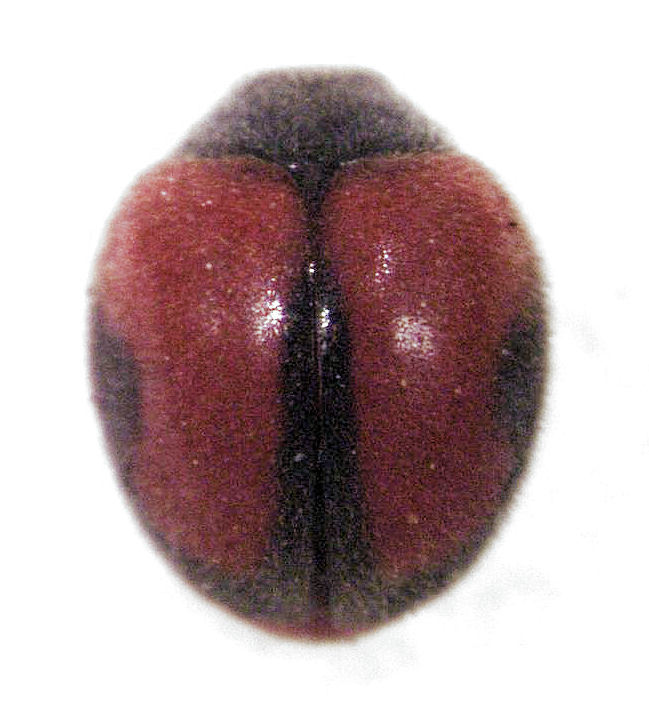
Rodolia koebelei (Coleoptera: Coccinellidae) is a fairly distinctive looking ladybird, about 3 mm in length. The extent of black markings on the elytra varies from none to that shown in the photo. This Australian species was reported as validated new to Rodolia koebeleiNew Zealand by Biosecurity New Zealand (2006). Nobody knows how it got here. On 19 February 2015, I found a single specimen, on a cultivated Hebe, on the Tamaki Campus. So far, this is the only specimen I have seen on campus, and I have only ever seen two others elsewhere in Auckland, though one of those two was at the adjacent Morrin Reserve. Very little is known about this species in New Zealand. In particular, mystery surrounds what it preys on. According to one overseas study, larvae of R. koebelei could only be reared to adults on Icerya koebelei and when they were offered other species of scale insect (I. purchasii, I. aegyptiaca, or I. seychellarum), they failed to feed and all died (Sands & Van Driesche, 2004). The mystery is that I. koebelei is not known to be present in New Zealand. Perhaps it actually does prey on the closely related cottony cushion scale (I. purchasi), which is present on campus. If so, this is evidence that the results of host range testing experiments need to be treated with caution. At any rate, there is plenty of scope for further research on this ladybird in Auckland. Larvae need to be located, and the likely prey needs to be determined. The species could potentially be useful as a biocontrol agent for cottony cushion scale, in the same way as the cardinal ladybird (Rodolia cardinalis), the latter of which now appears to be very rare in Auckland (I haven’t seen any on campus). Continue reading

An Experimental Mouse Invasion

Posted by Helen Nathan

New research by Helen Nathan, Mick Clout, Jamie MacKay, Elaine Murphy, James Russell

IMG_3884How much damage could a couple of mice do on a pest-free island? We used a novel experimental approach to demonstrate the importance of island biosecurity.

Two house mice (one male, one female) were released onto Te Haupa (Saddle) Island, a Department of Conservation scenic reserve which had previously hosted a mouse population, but had recently been declared pest-free. For the following 8 months we returned regularly to the island to undertake live trapping, allowing us to estimate the number of individual mice on the island, and plot the growth of the invasive population over time. We also took genetic samples from captured mice to confirm descent from the two founder individuals released. After 8 months, the experiment concluded and the population was eradicated using a combination of trapping and poison.

IMG_3916

Ear-punches were used to mark mice for identification and to provide a genetic sample

We found that population growth was initially rapid, peaking at an estimated 68 individuals 5 months after the release, then stabilising until the end of the 8 month experimental period. This pattern of growth reflects the classic model predicted by invasion biologists, but rarely observed in real-time as, in contrast to our study, the exact point in time when an invasion occurred is usually unknown. A surprise result from our genetic analysis showed that not all of the mice trapped at the end of our experiment were descended from the founding male and female. An unrelated female was first captured 3 months after the start of the invasion, and had produced offspring 1 month later. Genetic analysis suggests that this mouse most likely originated from another island off the north-east coast of New Zealand, almost certainly transported on a boat which had recently visited other nearby islands.

The extremely rapid population growth of the invading mouse population, along with the independent mouse incursion we detected, demonstrate the need for vigilant monitoring of our pest-free sanctuaries. For successful conservation and restoration of sites, invasive species populations must be detected early during colonisation to enable swift elimination, before the population becomes established.

Read the published research online now at Population Ecology http://link.springer.com/article/10.1007/s10144-015-0477-2

Or in the New Zealand Herald  http://www.nzherald.co.nz/nz/news/article.cfm?c_id=1&objectid=11399803

Helen Nathan is a PhD student in the Centre for Biodiversity and Biosecurity

Auckland Kereru Project

The Auckland Kereru Project: Following the movements and diets of urban kererū (NZ pigeon) in Auckland. 

Joint Graduate School in Biodiversity and Biosecurity PhD candidate Alice Baranyovits is investigating how kererū move around fragmented landscapes and more specifically how they utilise the urban environment. In particular she is interested in their diet, particularly where and when they are eating introduced plants. In order to do this she needs your help!

There are two ways to contribute as a one-off; by recording your garden plants and/or by recording urban kererū sightings (although you can enter as many kererū sightings as you like).

If you would prefer to have a more continual involvement you can register to take part in the phenology study (recording when your plants fruit) or the quarterly kererū count or both!

To sign up, please visit the Auckland Kereru Project website